



Russian Foreign Ministry issues statement on Solovyov’s remarks on Central Asia
Last Updated on January 16, 2026 10:04 pm
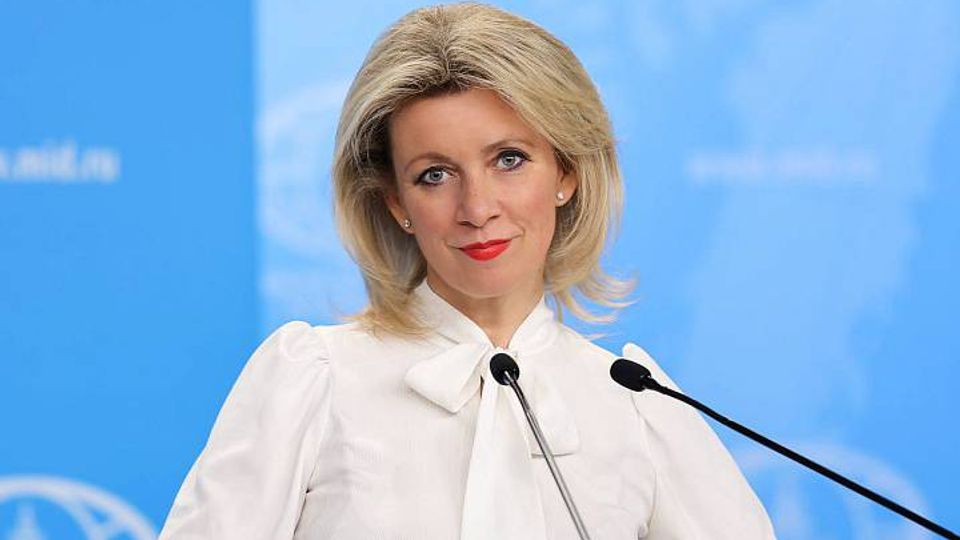
Russian Foreign Ministry Spokesperson Maria Zakharova addressed comments by television journalist Vladimir Solovyov related to Central Asia and Armenia.
Earlier, Russian television host Vladimir Solovyov had expressed that Armenia and Central Asia are more important to Russia than countries such as Syria or Venezuela, arguing that losing influence in these regions would pose a serious problem for Moscow. Speaking on his Solovyov Live program, he called for considering “special military operations” in what he described as Russia’s “near abroad,” drawing parallels with Ukraine, He claimed that national security interests should take precedence over international law – remarks sparked public backlash and official criticism.
Foreign Ministry spokesperson Maria Zakharova said the remarks voiced by Solovyov on his personal television platform were his personal views and should not be interpreted as Russia’s policy. She noted that the journalist framed his comments in the form of questions rather than official statements and warned that some analysts were deliberately presenting them in a provocative and manipulative way.
Zakharova emphasized that Russia’s official foreign policy is articulated only by authorized state representatives, including the president, prime minister, foreign minister, defense minister, and other senior officials. “Official positions are expressed exclusively by those who are empowered to do so,” she said.
Addressing regional relations, Zakharova reaffirmed that Russia maintains historically close ties with the countries of Central Asia and the South Caucasus, based on good-neighborly relations, strategic partnership, alliance, and long-standing cooperation. She added that mutual respect, trust, and direct dialogue between leaders of sovereign states remain key to the steady development of these relations.
She also pointed to ongoing engagement through regional and post-Soviet frameworks, including the CIS and the CSTO, as evidence of sustained political dialogue and cooperation.
Previously, the International Federation for Human Rights (FIDH) and its partners had asked the International Criminal Court to issue arrest warrants for six Russian officials and media figures, including Vladimir Solovyov, accusing them of crimes against humanity linked to incitement and propaganda against Ukrainian civilians. The request was based on an analysis of more than 2,000 video statements, with over 300 assessed as constituting hate speech amounting to crimes against humanity.