




Can Asean summit deliver regional peace?
Last Updated on October 25, 2025 10:35 pm
Thailand-Cambodia border tensions and Myanmar’s civil war will be key topics of discussion at the upcoming Association of Southeast Asian Nations (Asean) summit in the Malaysian capital, Kuala Lumpur.
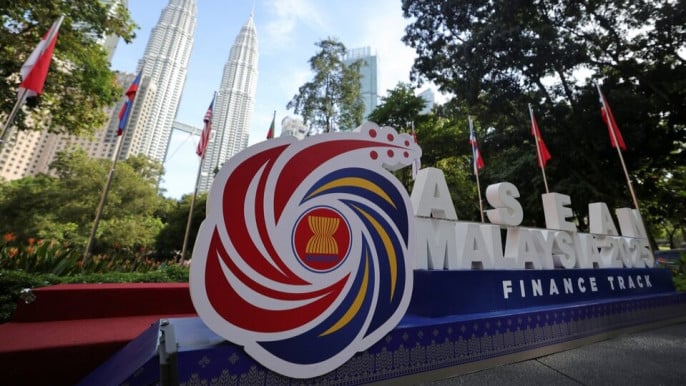
Malaysia, Asean’s current rotating chair, will host over 30 heads of state at the 26-28 October event, including US President Donald Trump, who is expected to oversee the signing of a peace accord between Thailand and Cambodia.
The two neighbours have a long-standing border dispute that goes back over a century.
Tensions along the Thai-Cambodia frontier erupted into full-scale cross-border combat in July. At least 43 people were killed and 300,000 civilians displaced during five days of clashes.
A ceasefire agreement brokered by Malaysia, China, and the US came into effect on 29 July.
However, despite the peace pact, tensions have remained high between the two neighbours. Thailand has accused Cambodia of laying land mines along parts of its joint frontier, saying that several Thai soldiers have been maimed by the munitions since July.
Cambodia has denied the allegations, and said that some Thai soldiers stepped on ordnance planted during a decades-long civil war that left it as one of the world’s most heavily mined countries.
US pushes for lasting peace deal
Trump has vowed to oversee the signing of a formal agreement for lasting peace between Thailand and Cambodia.
The US president had initially threatened to increase trade tariffs on both countries, should the conflict continue. But after both sides signed the July ceasefire, Thailand and Cambodia secured a lower rate of 19%.
Mark S. Cogan, an associate professor of peace and conflict studies at Japan’s Kansai Gaidai University in Osaka, said Kuala Lumpur has also bet on Washington stepping in and putting pressure on both Bangkok and Phnom Penh, to complement its own efforts to solve the conflict.
“Malaysia has elevated the United States and Trump in the Thai-Cambodia talks, hoping that Washington’s added political pressure and economic incentives will be enough for both sides to adhere to the forthcoming declaration,” Cogan told DW.
“Malaysian diplomacy has been a key part of negotiations so far, as the forthcoming peace deal will soon be called the Kuala Lumpur Accord, which is aimed to get both parties to take reasonable steps to keep the ceasefire in place.”
Can Asean find a peaceful solution in Myanmar?
Diplomatic efforts by Asean to resolve the conflict in Myanmar have so far proved ineffective.
Myanmar has been in a state of civil war since a February 2021 military coup overthrew the democratically elected government led by Nobel laureate Aung San Suu Kyi, sparking a nationwide revolt.
Over 3.5 million people have been displaced and thousands killed since the coup. A combination of opposition groups, people’s defense forces and ethnic armed organizations have taken to the battlefield with the military junta, in opposition to their rule.
In July, power was transferred to an interim civilian government, which plans to hold elections starting on 28 December.
Myanmar 2505 elections
Junta chief Min Aung Hlaing is currently acting president and has touted Myanmar’s upcoming polls as a path to reconciliation, despite admitting that they will not be held nationwide due to the ongoing fighting.
International monitors and rights groups have dismissed the vote as a ploy to legitimize continuing military rule in Myanmar.
Malaysia had said the priority in Myanmar should be ending violence and finding peace, rather than elections. However, delegates at the Asean summit are expected to discuss the issue of sending observers to monitor the December vote.
“Malaysia will have to put a response to how Asean will deal with the December elections in Myanmar because the military has invited some observers, but I don’t think Asean will send observers,” said Sharon Seah, senior fellow at the ISEAS-Yusof Ishak Institute in Singapore.
Asean has been battling to implement the so-called Five-Point Consensus agreed by leaders of the Southeast Asian bloc in 2021 in an attempt to address the crisis in Myanmar. It included ceasing violence, mediation, improved dialogue, humanitarian aid and a visit from a special envoy.