



Turkish Mediation in Focus as Araghchi Visits Ankara Amid Iran-US Tensions
Last Updated on January 29, 2026 11:10 pm
Periods of confrontation between the United States and Iran rarely unfold in isolation. Each escalation reverberates across the Middle East, placing pressure on neighboring states to respond, hedge, or intervene diplomatically. Türkiye, positioned at the crossroads of regional geopolitics and sharing a long border with Iran, has consistently sought to play a stabilizing role when tensions flare. That instinct has once again come to the fore as Ankara moves to intensify diplomatic engagement amid renewed U.S.-Iran friction.
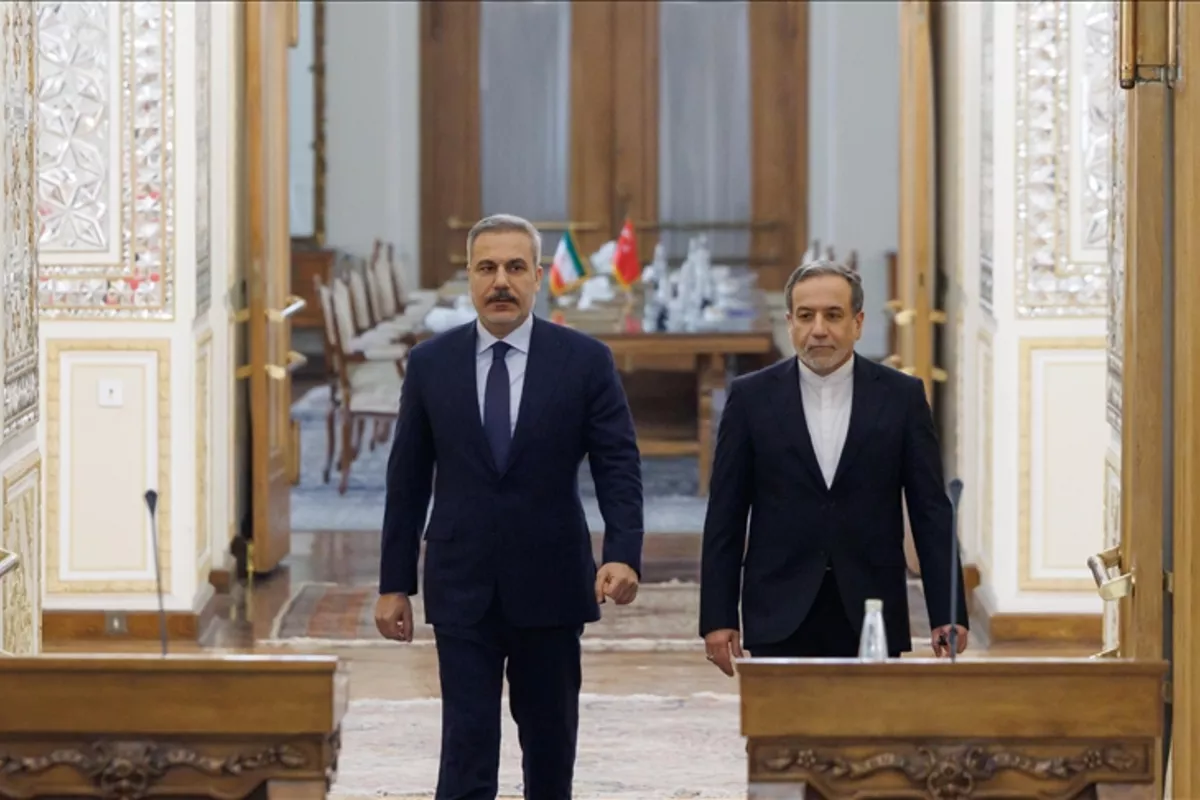
This approach has taken on particular urgency during the visit of Iranian Foreign Minister Abbas Araghchi to Türkiye for high-level talks. His trip to Ankara comes at a moment when rhetoric between Washington and Tehran has hardened, military signaling has intensified, and the risk of miscalculation has grown. For Türkiye, Araghchi’s visit represents more than a routine diplomatic exchange; it is an opportunity to assert a long-standing position against military escalation and to encourage dialogue as the only viable path forward.
Türkiye’s leadership views the current moment through a pragmatic lens shaped by geography and experience. As a NATO member with close ties to Washington, Ankara cannot ignore U.S. security concerns. At the same time, as Iran’s neighbor, it cannot afford the destabilizing consequences of a conflict next door. This dual reality has driven Türkiye to repeatedly emphasize that it opposes foreign military intervention against Iran and supports diplomatic efforts, particularly on the nuclear issue, as the most effective means of reducing tensions.
The renewed diplomatic push reflects Ankara’s belief that preventing war is not only a regional responsibility but a national security imperative. From migration pressures to border stability and economic spillovers, the costs of escalation would be immediate and difficult to contain. Against this backdrop, Türkiye’s message to both sides has remained consistent: dialogue may be slow and imperfect, but it is far less dangerous than confrontation.
Diplomacy Backed by Contingency Planning at the Border
While Türkiye continues to emphasize dialogue, it has not neglected the need for preparedness. Alongside its diplomatic efforts, Ankara has been quietly reviewing security measures along its border with Iran to ensure it is ready for potential spillover effects if tensions escalate.
The Turkish-Iranian border is already one of the most heavily monitored in the country. Over the years, Türkiye has invested in a combination of physical infrastructure and advanced surveillance technologies designed to deter irregular crossings and enhance situational awareness. These measures include modular concrete walls, trenches, electro-optical towers, and lift towers, all supported by continuous aerial reconnaissance.
Unmanned aerial vehicles conduct round-the-clock monitoring of the frontier, providing real-time intelligence and enabling rapid response when necessary. Turkish authorities emphasize that these systems are defensive in nature, aimed at maintaining border integrity rather than signaling hostility. At the same time, officials acknowledge that existing measures may need to be reinforced if instability in Iran were to increase significantly.
Options under review include deploying additional troops, expanding technological surveillance, and strengthening rapid-response capabilities. Turkish officials have been careful to avoid language that could imply the establishment of permanent buffer zones, but the underlying goal is clear: to ensure that Türkiye is not caught off guard by sudden developments.
So far, authorities report no evidence of large-scale migration linked to events in Iran. Monitoring continues closely, and assessments are updated regularly based on intelligence and field observations. This vigilance reflects lessons learned from past regional crises, where situations evolved rapidly and unpredictably.
Türkiye’s approach illustrates how diplomacy and security planning are intertwined rather than mutually exclusive. By advocating dialogue while preparing for contingencies, Ankara seeks to manage uncertainty and protect its national interests without contributing to escalation.
As long as relations between the United States and Iran remain volatile, Türkiye is likely to continue this dual-track strategy. Araghchi’s visit to Ankara highlights the diplomatic dimension of this effort, but the broader context underscores why Türkiye views de-escalation as essential. For Ankara, preventing conflict is not merely a matter of principle-it is a necessity shaped by geography, experience, and a deep understanding of the costs of war.