




Central Asian states pledge to unify efforts to address global warming-related issues
Last Updated on April 25, 2026 9:11 pm
A groundbreaking Central Asian ecological summit has endorsed a Kazakh plan to establish an International Water Organization under UN auspices while pledging to better coordinate efforts to address the consequences of climate change.
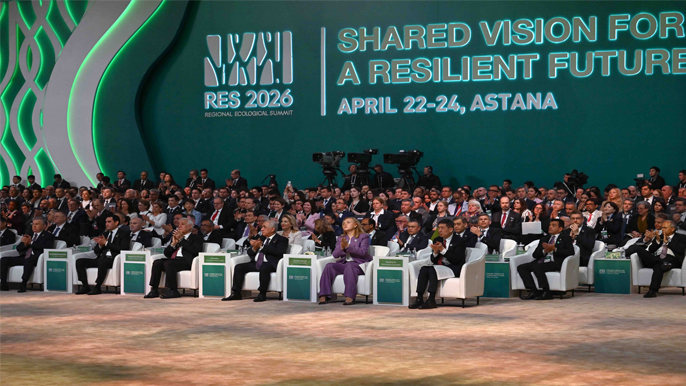
A three-day Regional Ecological Summit 2026 wrapped up in the Kazakh capital Astana on April 24 by publishing a declaration of intent to address a broad array of issues, including glacier melt, desertification, plastic pollution, waste management and lowering water levels in lakes, reservoirs and the Caspian and Aral seas.
“Addressing these challenges requires coordinated regional efforts and strong international support,” President Kassym-Jomart Tokayev said in his opening remarks at the summit. “At the same time, climate action must remain balanced and inclusive, taking into account the legitimate development needs of countries.”
The need for unity in formulating and implementing policies was a theme that sounded throughout the document. The five Central Asian states pledged to “intensify efforts to develop joint regional positions and solutions within multilateral environmental processes … [and] support and advance regional environmental and climate projects aimed at addressing regional challenges and strengthening sustainable development in Central Asia.”
Kazakh officials used the occasion of the summit to lay the groundwork for the establishment of an International Water Organization to mitigate water-related challenges that threaten global human and economic development. Tokayev sought buy-in for the concept during an April 23 meeting with the heads of multilateral organizations dedicated to addressing water-related issues, held on the summit sidelines.
Also on the summit sidelines, the United Nations Development Programme and the Kazakh government hosted a meeting of top officials from all Central Asian states that yielded a Regional Cooperation Declaration to “strengthen regional collaboration on biodiversity conservation and its sustainable use.”
At the summit itself, Foreign Minister Yermek Kosherbayev told participants that a new global water organization would be intended “not to duplicate existing efforts, but to reduce fragmentation, strengthen institutional coherence, improve accountability, and promote a more holistic approach to water across the full cycle from source to service.”
The summit declaration additionally outlined plans for joint efforts to “inventory and map sources of pollution … and to take joint measures to improve the state of the environment.” Central Asian states also expressed a desire to promote the compatibility of individual country standards and methods for monitoring and forecasting regional environmental hazards, noting that new digital technologies and artificial intelligence could be of great assistance in such areas.
Central Asian leaders, via their declaration, called on the international community to “actively support the regional initiatives of Central Asia, including through strengthening institutional capacity, financing regional projects and facilitating technology transfers.”