Tag: US

  • US, Iran wrap up critical Oman talks as tensions persist

    US, Iran wrap up critical Oman talks as tensions persist

    The United States and Iran concluded indirect negotiations in Oman yesterday (6 February), marking the highest level diplomatic engagement between the two nations in months.

    US president Donald Trump described the discussions as “very good talks,” but stressed that much remains unresolved, reports CNN.

    “Iran looks like it wants to make a deal very badly,” Trump said aboard Air Force One, adding that the ultimate outcome will depend on what terms Tehran is willing to accept.

    The meetings held in the Gulf Arab state of Oman represented the first formal round of exchanges since last summer’s military strikes by the US and Israel against Iranian targets.

    Officials from both sides have agreed to continue talks following consultations with their respective capitals, according to a source familiar with the negotiations.

    Trump warned that Iran could face military action if it uses lethal force against protesters or rejects a nuclear deal.

    Abbas Araghchi, Iran’s deputy foreign minister, emphasized a cautious but firm approach on X, “We enter diplomacy with open eyes and a steady memory of the past year. We engage in good faith and stand firm on our rights.”

    Despite describing the talks as productive, Trump said a “big fleet” was heading toward Iran.

    Who took part?

    Iran’s Abbas Araghchi and US envoy Steve Witkoff participated in the indirect talks, joined by Trump’s son-in-law Jared Kushner. Omani Foreign Minister Badr Albusaidi mediated, holding separate consultations.

    Photos showed Admiral Brad Cooper, the commander of US Central Command (CENTCOM), present, highlighting the military-diplomatic stakes.

    Iranian media noted the format mirrored previous Oman-facilitated rounds; talks stalled last June after Israel and the US struck Iranian nuclear and military sites following five rounds of indirect negotiations.

    What was on the table?

    During the talks, Araghchi presented Oman with a “preliminary plan” to “manage the current situation” with the US, which Oman passed on to Washington for a response to be relayed back to Tehran.

    The scope of discussions was unclear. Iran insisted the focus remain solely on the nuclear issue, excluding ballistic missiles, regional proxies, or domestic unrest. The US pushed for a broader agenda covering Iran’s missile program, armed proxies, and its crackdown on protests.

    Central to the nuclear talks is Iran’s demand to enrich uranium, which can be used for civilian energy or, at high purity, nuclear weapons. Tehran offered safeguards to prevent weaponization but seeks sanctions relief, a condition rejected by the US and its allies.

    After the meetings, the US imposed new sanctions on Iranian oil and 14 vessels carrying it. State Department Deputy Spokesperson Tommy Pigott said, “Instead of investing in the welfare of its own people and crumbling infrastructure, the Iranian regime continues to fund destabilizing activities around the world and step up its repression inside Iran.”

    What’s at stake?

    The US has recently deployed major military assets to the Middle East, including the USS Abraham Lincoln carrier strike group, raising fears that any miscalculation could spark open conflict. Trump has described the buildup as a precaution, calling it an “armada” en route to the region “just in case,” though he stressed hopes to avoid war. His Friday comments about a “big fleet” arriving soon signal that tensions remain high.

    Regional governments have urged de-escalation, warning that an attack on Iran could destabilize an already volatile region. Tehran has vowed to respond to any US strike, with a vast arsenal of missiles and drones capable of targeting American forces and assets. Last summer, Iran retaliated against US bombings of nuclear sites with a missile strike on al Udeid Air Base in Qatar, the region’s largest US military installation.

    Beyond conventional weapons, Iran could mobilize its network of militias and proxies, threatening Israel, US interests, and global shipping through the Strait of Hormuz, a key chokepoint for more than a fifth of the world’s oil and a large share of liquefied natural gas exports.

  • US, South Korea agree to deepen cooperation on nuclear-powered subs, Seoul says

    US, South Korea agree to deepen cooperation on nuclear-powered subs, Seoul says

    US Under Secretary of Defense for Policy Elbridge Colby and South Korean Defence Minister Ahn Gyu-back agreed during talks on Monday to deepen cooperation on Seoul’s pursuit of a nuclear-powered submarine, South Korea’s defence ministry said.

    Colby is visiting Seoul on his first overseas trip in the post, which comes as Washington signals it expects South Korea to take a more leading role in deterring North Korea.

    In a statement, the ministry said both sides viewed cooperation on a nuclear-powered submarine as a step that would strengthen South Korea’s ability to lead the defence of the peninsula and elevate the security alliance.

    The Pentagon’s new National Defense Strategy released on Friday said that it expects a “more limited” US role in deterring North Korea, with South Korea taking the primary responsibility.

    Ahn also pressed for faster progress on the transfer of wartime operational control to Seoul and called for closer coordination on alliance follow-up measures, the ministry said.

    Colby, the Pentagon’s top defence and foreign policy official, said in a post on X on his arrival that South Korea is a “model ally” committed to increasing defence spending in line with US regional strategy.

    South Korea hosts about 28,500 US troops and last year pledged to lift defence spending to 3.5% of GDP, a move that Colby and other US officials have praised as strengthening Seoul’s role in deterring North Korea.

    Colby will also visit Japan during his Asian trip, according to media reports.

  • After US, Mexico announces up to 50% tariffs on India

    After US, Mexico announces up to 50% tariffs on India

    Mexico has imposed steep new tariffs on a wide range of Asian imports, marking a sharp break from its long-standing pro-free-trade approach — and putting India among the key exporting nations affected by the move.

    In a significant policy shift, Mexico’s Senate has approved a new tariff regime that raises duties, in some cases up to 50%, on more than 1,400 products imported from countries that do not have a formal trade agreement with Mexico, Reuters reported.

    The list of targeted nations includes China, India, South Korea, Thailand and Indonesia.

    The upper house cleared the bill with 76 votes in favour, five against and 35 abstentions, brushing aside protests from domestic industry bodies and strong objections from China. The lower house had already approved the measure.

    Beginning next year and expanding through 2026, the new rates will apply to a wide swath of industrial inputs and consumer goods, including automobiles and parts, textiles, apparel, plastics, metals and footwear.

    While select items will face the maximum 50 per cent duty, most products are expected to fall under the 35 per cent bracket.

    Why it matters for India

    India, which has sought to boost exports of textiles, auto components and engineering goods to Latin America, now faces a significantly more challenging entry into the Mexican market, the second-largest economy in the region and a key North American gateway.

    Indian exporters have long leveraged Mexico as a stepping stone to the US, thanks to its integration in North American supply chains.

    The tariff hikes threaten to hamper that advantage.

    Several Mexican import-dependent manufacturers have warned the government that higher duties on goods from India and other Asian nations will push up production costs and stoke inflation, according to agency reports.

    Implications for India and the region

    For Indian exporters, the tariff shift could:

    Reduce competitiveness in industries such as textiles, leather goods, auto parts and steel.
    Push companies to reconsider supply-chain routing through Mexico.
    Increase landed costs for Indian firms operating in or supplying to North American value chains via Mexico.
    India’s commerce Ministry has not issued a statement yet.

    Washington’s shadow over Mexico’s move

    Analysts, including those in India tracking Latin American markets, believe Mexico’s sudden protectionist turn is closely tied to pressure from the United States ahead of next year’s USMCA (United States-Mexico-Canada Agreement) review.

    President Claudia Sheinbaum’s government is understood to be signalling alignment with Washington’s tougher stance on Chinese goods, hoping this might help ease the sweeping US tariffs that have hit Mexico’s own exports such as steel and aluminium.

    Although Sheinbaum denied the tariffs are linked to US demands, the structure of the new duties strongly mirrors American trade actions, a Bloomberg report noted.

    The version passed this week is milder than an earlier proposal, which had sought strict duties across nearly 1,400 tariff lines.

    Lawmakers have now reduced the severity of tariffs on about two-thirds of those categories.

    Even so, the Mexican finance ministry expects the new levies to bring in nearly 52 billion pesos (₹19,000 crore) in additional revenue next year, money the government says it needs to narrow its fiscal deficit.

    Mixed reactions within Mexico

    Mario Vazquez, an opposition PAN senator, said that although the tariffs may help certain sectors overwhelmed by cheaper Chinese imports, “they also act as a tax on consumers,” and he questioned how the government intends to use the extra revenue.

    Emmanuel Reyes of the ruling Morena party defended the bill, arguing that the measure will “strengthen Mexican products in global supply chains and protect jobs in priority sectors.”

    Local auto groups especially supported the move, warning that China’s rapid rise — now accounting for 20 per cent of Mexico’s auto market, up from almost nothing six years ago — could threaten Mexico’s domestic manufacturing base.

    Under the new rules, imported Chinese cars will face the steepest duty at 50 per cent.

    More changes ahead

    The legislation also gives Mexico’s Economy Ministry sweeping authority to revise tariffs on non-FTA countries at will, enabling rapid adjustments ahead of the USMCA review.

    This new flexibility could mean more fluctuations in duty structures for Indian exporters.

    With the US and Canada both tightening scrutiny on Chinese supply-chain routing, Mexico’s move underscores a broader North American shift toward protectionism.

  • US, Japan defense chiefs say China harming regional peace

    US, Japan defense chiefs say China harming regional peace

    TOKYO: Beijing’s actions are “not conducive to regional peace,” Japan’s defense minister and US counterpart Pete Hegseth agreed during a call after Chinese aircraft locked radar on Japanese jets near Taiwan, Tokyo said Friday.

    The December 6 radar incident came after comments by Prime Minister Sanae Takaichi on Taiwan that infuriated China.

    It was followed this week by Chinese-Russian air patrols around Japan.

    Hegseth and Shinjiro Koizumi “exchanged candid views on the increasingly severe security situation in the Indo-Pacific region, including the radar incident,” the Japanese defense ministry said after the call.

    They “expressed serious concern over any actions to increase regional tensions, as China’s actions are not conducive to regional peace and stability,” the statement added.

    Koizumi said on X that he told Hegseth that China was “disseminating information that is completely contrary to the facts” about the radar incident.

    “However, Japan has made clear that it does not seek escalation and that we are responding calmly while making necessary rebuttals, and we are keeping the door open for dialogue,” Koizumi added.

    Hegseth’s office said that they “discussed… China’s military activities” among other issues including “Japan’s efforts to increase its defense spending and strengthen its capabilities.”

    “Secretary Hegseth and Defense Minister Koizumi reaffirmed the importance of the US-Japan Alliance and underscored their commitment to deterring aggression in the Asia-Pacific,” the US statement added.

    ‘Tactical exercises’

    Takaichi had suggested on November 7 that Japan would intervene with military force in any Chinese attack on Taiwan, which Beijing claims as its own and has not ruled out seizing by force.

    Last week, J-15 jets from China’s Liaoning aircraft carrier twice locked radar on Japanese aircraft that had scrambled in international waters near Okinawa, according to Japan.

    Fighter jets use their radar for fire control to identify targets as well as for search and rescue operations.

    But China’s foreign ministry on Wednesday accused Japan of sending the jets “to intrude into the Chinese training area without authorization, conduct close-range reconnaissance and harassment, create tense situations, and… maliciously hype up the situation.”

    On Tuesday two Russian Tu-95 nuclear-capable bombers flew from the Sea of Japan to rendezvous with two Chinese H-6 bombers in the East China Sea, then conducted a joint flight around the country, Japan said.

    Japan said that it scrambled fighter jets in response.

    A day later, Japan and the United States air forces conducted their own joint air drills, Tokyo said.

    The “tactical exercises” over the Sea of Japan involved two US B52 bombers, three Japanese F-35 fighter jets and three Japanese F-15s, Tokyo said.

    South Korea said Tuesday that Russian and Chinese warplanes also entered its air defense zone, with Seoul also deploying fighter jets that same day.

    Beijing confirmed on Tuesday that it had organized drills with Russia’s military according to “annual cooperation plans.”

    Moscow also described it as a routine exercise, saying it lasted eight hours and that some foreign fighter jets followed the Russian and Chinese aircraft.

  • US, Japan hold joint air exercise after China-Russia patrols

    US, Japan hold joint air exercise after China-Russia patrols

    TOKYO: Japan said Thursday it held a joint air exercise with the United States in a show of force, days after Chinese-Russian patrols in the region and following weeks of diplomatic feuding between Tokyo and Beijing.

    The Japanese joint chiefs of staff said Wednesday’s exercise with the US Air Force was conducted in “an increasingly severe security environment surrounding our country.”

    Tokyo said Wednesday that two Russian Tu-95 nuclear-capable bombers flew a day earlier from the Sea of Japan to rendezvous with two Chinese H-6 bombers in the East China Sea, then conducted a joint flight around the country.

    Japan said that it scrambled fighter jets in response.

    Prime Minister Sanae Takaichi angered Beijing last month by suggesting that Japan would intervene with military force in any Chinese attack on Taiwan.

    Thursday’s announcement by Japan’s chiefs of staff said: “We confirmed the strong resolve of Japan and the United States not to allow any unilateral change of the status quo by force, as well as the readiness of the Self-Defense Forces and the US military.”

    In a separate statement it said that the “tactical exercises” over the Japan Sea involved two US B52 bombers, three Japanese F-35 fighter jets and three Japanese F-15s.

    The joint exercise came as the United States criticized Beijing for the first time on Wednesday after Chinese military aircraft locked radar onto Japanese jets on Saturday.

    The J-15 jets from China’s Liaoning aircraft carrier twice locked radar on Japanese aircraft in international waters near Okinawa, according to Japan, which scrambled jets in response.

    “China’s actions are not conducive to regional peace and stability,” a US State Department spokesperson told AFP on Wednesday.

    “The US-Japan Alliance is stronger and more united than ever. Our commitment to our ally Japan is unwavering, and we are in close contact on this and other issues.”

    Fighter jets use their radar for fire control to identify targets as well as for search and rescue operations.

    Tokyo also summoned Beijing’s ambassador following the radar incident, over which the two countries offer differing accounts of events.

    Japan said it scrambled its F-15 jets because it was worried about possible “airspace violations.”

    Guo Jiakun, spokesman for the ministry of foreign affairs, accused Japan Wednesday of sending the jets “to intrude into the Chinese training area without authorization, conduct close-range reconnaissance and harassment, create tense situations, and continue to maliciously hype up the situation.”

    Takaichi’s comments about intervening in any Taiwan emergency enraged Beijing as China claims the self-ruled island as its own and has not ruled out seizing it by force.

    Tokyo was forced to deny a Wall Street Journal report that said US President Donald Trump had advised Takaichi not to provoke China over Taiwan’s sovereignty.

    But Tokyo is apparently frustrated at the lack of public support from top officials in Washington and has urged the US to be more vocal, the Financial Times reported on Sunday.

    ‘Regrettable’

    NATO chief Mark Rutte said on Wednesday that the radar incident and the joint Chinese-Russian patrols were “regrettable,” Japan’s Defense Minister Shinjiro Koizumi said on X.

    The statement followed a 15-minute video conference between Rutte and Koizumi, the defense ministry said in a statement.

    Rutte “affirmed that security in the Indo-Pacific and Euro-Atlantic regions is completely inseparable,” Koizumi said.

    South Korea said Tuesday that Russian and Chinese warplanes also entered its air defense zone, with Seoul also deploying fighter jets that same day.

    Beijing confirmed later on Tuesday that it had organized drills with Russia’s military according to “annual cooperation plans.”

    Moscow also described it as a routine exercise, saying it lasted eight hours and that some foreign fighter jets followed the Russian and Chinese aircraft.

  • Australia’s Albanese discusses US minerals deal, jet incident with China’s Premier Li

    Australia’s Albanese discusses US minerals deal, jet incident with China’s Premier Li

    MELBOURNE: Australian Prime Minister Anthony Albanese said he discussed Australia’s critical-minerals deal with the United States and the hostile maneuvers of a Chinese warplane during a “positive” meeting on Monday with Chinese Premier Li Qiang.

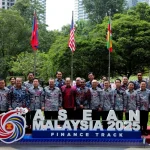
    Albanese and China’s second-most senior leader held a bilateral meeting in Kuala Lumpur, Malaysia, on the sidelines of the Association of Southeast Asian Nations’ summit.

    “Once again, it was a positive meeting,” Albanese told reporters of his seventh meeting with Li.

    “This is a relationship that has improved; that is stabilising,” Albanese added.

    China has removed a series of official and unofficial trade barriers since Albanese’s center-left government was first elected in 2022. The barriers imposed in 2020 when Beijing banned minister-to-minister bilateral contacts had cost Australian exporters up to $13 billion a year.

    Albanese said he and Li had discussed the Australian leader’s visit to the US last week during which he and US President Donald Trump signed a $8.5 billion critical minerals deal.

    The US is eyeing Australia’s rich rare earth resources at a time when China is imposing tougher rules on exporting its own critical minerals abroad.

    “We talked about the relationship with the US I clearly have indicated the success of my visit to the United States and we talked in a common way about that it was a good thing that President Trump and President Xi (Jinping) are having a meeting over the next little period,” Albanese said.

    Albanese did not directly answer when a reporter asked if Li had expressed an opinion on the US-Australia minerals pact.

    China’s Xinhua news agency reported Li told Albanese China hoped Australia will provide an open, transparent and non-discriminatory environment for Chinese enterprises to invest and operate in the country.

    China was also willing to cooperate with Australia on the green economy, high-tech industries and the digital sector, Li said.

    Australia shares US concerns over China’s global dominance in critical minerals and control over supply chains in the renewable energy sector.

    Last year, the Australian government ordered five China-linked companies to divest their shares in the rare earth mining company Northern Minerals, citing Australia’s national interests.

    Australia’s foreign investment rules also prevent Chinese ownership of critical infrastructure.

    Albanese said he had also raised with Li the behavior of a Chinese fighter jet during a confrontation with an Australian air force surveillance plane in international air space over the South China Sea on Oct. 19.

    The Chinese Su-35 jet twice released flares “very close” to the Australian P-8 Poseidon aircraft, Australian Defense Minister Richard Marles said last week.

    Australia officially protested what the government described as the Chinese air crew’s unsafe and unprofessional behavior.

    Senior Col. Li Jianjian, a Chinese military spokesperson, accused the Australian aircraft of illegally entering the airspace of China’s Xisha Islands without Beijing’s approval.

    “The actions of the Australian side seriously violated China’s sovereignty and could easily trigger unexpected maritime or aerial incidents. We sternly warn Australia to immediately cease its infringement and provocation,” the officer said in a statement last week.

    Albanese said he told the premier “this was an incident of concern for Australia.”

    “We have disagreements and friends are able to discuss issues frankly. I did that directly,” Albanese said.

    Li “heard the message very directly. I’m not here to report in on … what people say when I have meetings,” Albanese added.

    In July, Albanese said he complained about the Chinese military to President Xi Jinping during a bilateral meeting in Beijing. A Chinese flotilla had conducted a naval live-fire exercise off the Australian coast that forced commercial aircraft to change course in February.

    The mission was widely regarded as a display of the Chinese military’s growing strength.

    Albanese said he had raised with Li at a meeting in Australia last year recent clashes between the two countries’ militaries in the South China Sea and Yellow Sea that Australia argued endangered Australian personnel.

  • US, China agree on trade framework ahead of leaders’ meeting

    US, China agree on trade framework ahead of leaders’ meeting

    Top Chinese and US economic officials agreed on the framework for a trade agreement today (26 October) as US President Donald Trump said he was confident of hashing out a deal with Chinese President Xi Jinping when they meet in the coming days.

    US Treasury Secretary Scott Bessent and Trade Representative Jamieson Greer met with Chinese Vice Premier He Lifeng and top trade negotiator Li Chenggang on the sidelines of the Asean summit in Kuala Lumpur for a fifth round of in-person discussions since May.

    “I think we have a very successful framework for the leaders to discuss on Thursday,” Bessent told reporters.

    Bessent told NBC’s “Meet the Press” that he anticipated the agreement would defer China’s expanded export controls on rare earth minerals and magnets and avoid a new 100% US tariff on Chinese goods threatened by Trump.

    He said Trump and Xi would discuss soybean and agricultural purchases from American farmers, more balanced trade and resolving the US fentanyl crisis, which was the basis of 20% US tariffs on Chinese goods.

    China’s Li said both sides had reached a “preliminary consensus” and will next go through their respective internal approval processes.

    “The US position has been tough,” Li said. “We have experienced very intense consultations and engaged in constructive exchanges in exploring solutions and arrangements to address these concerns.”

    Trump arrived in Malaysia today for a summit of the Association of Southeast Asian Nations, his first stop in a five-day Asia tour that is expected to culminate in a face-to-face with Xi in South Korea on 30 October.

    After the talks, he struck a positive tone, saying: “I think we’re going to have a deal with China”.

    Trade truce
    Both sides are looking to avert an escalation of their trade war after Trump threatened new 100% tariffs on Chinese goods and other trade curbs starting on 1 November, in retaliation for China’s expanded export controls on rare earth magnets and minerals.

    Beijing and Washington rolled back most of their triple-digit tariffs on each other’s goods under a trade truce, which is due to expire on 10 November.

    The US and Chinese officials said they discussed trade expansion, an extension of the truce, fentanyl, US port entrance fees, rare earths, TikTok and more.

    Li described the discussions as “candid”, while Bessent said they were “very substantial negotiations”.

    Bessent said the truce could be extended, pending the president’s decision, marking a second extension since it was first signed in May.

    Talking points
    While the White House has officially announced the highly anticipated Trump-Xi talks, Beijing has yet to confirm that the two leaders will meet.

    On the sidelines of the Asean Summit, Trump hinted at possible meetings with Xi in China and the United States.

    “We’ve agreed to meet. We’re going to meet them later in China, and we’re going to meet in the US, in either Washington or at Mar-a-Lago,” he said.

    Among Trump’s talking points with Xi are Chinese purchases of US soybeans, concerns around democratically-governed Taiwan which Beijing views as its own territory, and the release of jailed Hong Kong media tycoon Jimmy Lai.

    The detention of the founder of the now-defunct pro-democracy newspaper Apple Daily has become the most high-profile example of China’s crackdown on rights in Hong Kong.

    Trump also said that he would seek China’s help in Washington’s dealings with Russia, as Moscow’s war in Ukraine grinds on.

    Fragile truce
    Tensions between the world’s two largest economies flared in the past few weeks as a delicate trade truce, reached after a first round of trade talks in Geneva in May and extended in August, failed to prevent the two sides from hitting each other with more sanctions, export curbs and threats of stronger retaliatory measures.

    The latest round of talks has likely centred around China’s expanded controls of rare earths exports that have caused a global shortage.

    That has prompted the Trump administration to consider a block on software-powered exports to China, from laptops to jet engines, according to a Reuters report.

  • US staging drone flights over Gaza to monitor ceasefire: Report

    US staging drone flights over Gaza to monitor ceasefire: Report

    LONDON: The US military is operating surveillance drones over Gaza to monitor the status of the Israel-Hamas ceasefire, the New York Times reported.

    The operation is part of a larger effort to ensure that the two parties abide by the terms of the ceasefire agreement, military officials said.

    With Israel’s consent, the drones have been used to monitor ground activity in Gaza, two Israeli military officials and a US defense official told the newspaper on condition of anonymity.

    The drone operators are based at the new Civil-Military Coordination Center in southern Israel. The center was launched last week by US Central Command.

    The US has previously flown reconnaissance missions over Gaza in order to locate hostages, but the latest mission highlights a desire to attain independence from Israeli operations, the NYT reported.

    The Israel-Hamas truce was brokered by the US, Qatar and Egypt, and has been strained by recent bouts of violence in Gaza and delays over the exchange of bodies from both sides.

    Trump administration officials this week said there are concerns within the US government over Israeli Prime Minister Benjamin Netanyahu potentially exiting the deal.

    US Secretary of State Marco Rubio toured the Civil-Military Coordination Center on Friday, saying: “There’s going to be ups and downs and twists and turns, but I think we have a lot of reason for healthy optimism about the progress that’s being made.”

    The center pledged to “help facilitate the flow of humanitarian, logistical and security assistance from international counterparts” into Gaza.

    Timothy Hawkins, a captain and spokesman for Central Command, told Israeli channel i24 this week that the center “includes an operations floor that enables us to monitor in real time what is happening on the ground in Gaza.”

    Daniel B. Shapiro, former US ambassador to Israel, said: “If there was total transparency and total trust between Israel and the US there wouldn’t be a need for this. But obviously the US wants to eliminate any possibility of misunderstanding.”

  • US, China seek to avoid trade war escalation, salvage Trump–Xi meeting in Malaysia talks

    US, China seek to avoid trade war escalation, salvage Trump–Xi meeting in Malaysia talks

    Top economic officials from the United States and China ended their first day of talks in Kuala Lumpur on Saturday (25 October), with a Treasury spokesperson describing them as “very constructive.”

    The world’s two largest economies are looking to avert an escalation of their trade war and ensure that a meeting happens next week between US President Donald Trump and Chinese President Xi Jinping.

    The talks, held on the sidelines of the Association of Southeast Asian Nations summit, aim to chart a path forward after Trump threatened new 100% tariffs on Chinese goods and other trade curbs starting on 1 November, in retaliation for China’s expanded export controls on rare earth magnets and minerals.

    The recent actions, which also include an expanded US export blacklist covering thousands more Chinese firms, have disrupted a delicate trade truce crafted by US Treasury Secretary Scott Bessent, US Trade Representative Jamieson Greer and Chinese Vice Premier He Lifeng over four previous meetings since May.

    He smiled and waved to reporters but did not comment as the Chinese delegation left the venue for the talks at Kuala Lumpur’s Merdeka 118 tower, the second‑tallest building in the world.

    China’s top trade negotiator Li Chenggang is also participating in the talks. A Reuters witness saw Li arriving alongside He earlier in the day.

    A Treasury spokesperson said: “They have been very constructive, and we expect them to resume in the morning.”

    The Malaysian government and the US and Chinese sides have provided few details about the meeting or any plans to brief the media on outcomes.

    Talking points

    The three officials will try to pave the way for Trump and Xi to meet next Thursday at an Asia‑Pacific Economic Cooperation summit in South Korea, a high‑stakes conversation that could revolve around interim relief on tariffs, technology controls and Chinese purchases of US soybeans.

    Minutes before the talks started, Trump left Washington for his Asia tour and laid out several talking points for the meeting with Xi.

    He said farmers, hit by a Chinese freeze on US soybean purchases, and the democratic island of Taiwan, which China claims as its own territory, would be on the list of topics discussed. Trump added that he does not have any plans to visit Taiwan.

    He also flagged the case of jailed Hong Kong media tycoon Jimmy Lai, whose detention has become the most high‑profile example of China’s crackdown on rights and freedoms in the Asian financial hub.

    “We have a lot to talk about with President Xi, and he has a lot to talk about with us. I think we’ll have a good meeting,” Trump said.

    Trump left Washington on Friday night for a five‑day trip to Malaysia, Japan and South Korea — his first to the region and his longest journey abroad since taking office in January.

    Aboard Air Force One, he told reporters that he would also like China to help Washington in its dealings with Russia.

    Delicate balance

    Josh Lipsky, international economics chair at the Atlantic Council in Washington, said Bessent, Greer and He must first find a way to mitigate their dispute over US technology export curbs and China’s rare earths controls, which Washington wants reversed.

    “I’m not sure the Chinese can agree to that. It’s the primary leverage that they have,” Lipsky said.

    Some announcements may fall to Trump, who is due to arrive in the Malaysian capital on Sunday.

    “We won’t know if Beijing has successfully counterbalanced the US’s export controls with restrictions of their own or if they’ve induced a continuation of an escalatory spiral until Trump and Xi meet,” said Scott Kennedy, a China economics expert at Washington’s Center for Strategic and International Studies.

    “If they make a deal, their gambit will have paid off. If there’s no deal, then everyone will need to prepare for things to get much nastier.”

    Rare earths stranglehold

    The world’s two largest economies are seeking to avoid a return to triple‑digit tariff escalation on both sides.

    Bessent and Greer’s first meeting with He in Geneva in May led to a 90‑day truce, which brought tariffs down to about 55% on the US side and 30% on the Chinese side, and restarted the flow of magnets. It was extended in subsequent talks in London and Stockholm and was due to expire on 10 November.

    But the truce frayed at the end of September, when the US Commerce Department vastly expanded an export blacklist to automatically include firms more than 50% owned by companies already on the list, banning US exports to thousands more Chinese firms.

    China struck back with new global rare earth export controls on 10 October, aiming to prevent their use in military systems.

  • Erdogan says US, others must press Israel to abide by Gaza ceasefire

    Erdogan says US, others must press Israel to abide by Gaza ceasefire

    Turkish President Tayyip Erdogan said the United States and others must do more to push Israel to stop violating the Gaza ceasefire agreement, including the possible use of sanctions or halting arms sales.

    NATO member Turkey, one of the most vocal critics of Israel’s attacks on Gaza, has joined the ceasefire negotiations as a mediator after largely indirect involvement. Its increased role followed a meeting last month between Erdogan and US President Donald Trump at the White House.

    “As Turkey, we are doing our utmost for the ceasefire to be secured. The Hamas side is abiding by the ceasefire. In fact, it is openly stating its commitment to this. Israel, meanwhile, is continuing to violate the ceasefire,” Erdogan told reporters on his return flight from a regional Gulf tour.

    “The international community, namely the United States, must do more to ensure Israel’s full compliance with the ceasefire agreement,” he said, according to a transcript of his comments shared by his office on Friday (24 October).

    “Israel must be forced to keep its promises via sanctions, or by halting arms sales.”

    Ankara has said it would join a “task force” to oversee the implementation of the ceasefire, that its armed forces could serve in a military or civilian capacity as needed, and that it will play an active role in the reconstruction of the enclave.

    Israeli Prime Minister Benjamin Netanyahu hinted on Wednesday at his opposition to any role for Turkish security forces in the Gaza Strip.

    Asked about Netanyahu’s comments, Erdogan refrained from his usual criticism of the Israeli leader and appeared to soften his earlier commitment to taking a role on the ground in Gaza, saying talks on the issue were still underway.

    “Talks are continuing on the task force that will work in Gaza. The modalities of this are not yet clear. As this is a multi‑faceted issue, there are comprehensive negotiations. We are ready to provide Gaza with any form of support on this issue,” he said.

    He also reiterated a previous call for Gulf countries to take action on financing efforts to rebuild Gaza, saying nobody could single‑handedly complete this task.

    Relations between former allies Israel and Turkey have hit new lows during the Gaza war, with Ankara accusing Netanyahu’s government of committing genocide — an allegation Israel has repeatedly denied.