






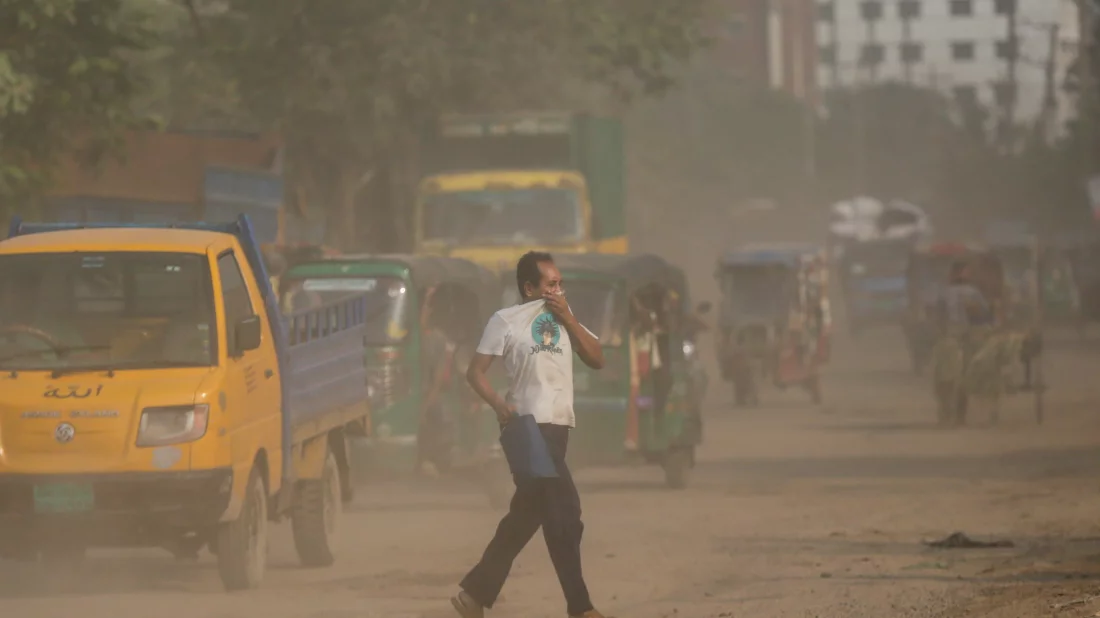
Air Pollution Costs Bangladeshis 5.5 Years of Life—Biggest Risk Nationwide
Last Updated on August 27, 2025 6:32 pm
Dhaka, August 27 — Air pollution has emerged as the single biggest threat to life expectancy in Bangladesh, reducing the average lifespan of citizens by 5.5 years, according to the latest findings of the Air Quality Life Index (AQLI) from the University of Chicago’s Energy Policy Institute (EPIC).
The report, set to be released globally on August 28 at 10:00 am Bangladesh time, reveals that the health toll of air pollution in Bangladesh far exceeds that of other major risks, including tobacco use, which cuts life expectancy by 2 years, and malnutrition, which reduces it by 1.4 years.
The study underscores that all 166.8 million Bangladeshis live in areas where air pollution levels breach both World Health Organization (WHO) and national standards. Even in Lalmonirhat—the least polluted district—particulate matter concentrations are seven times higher than WHO guidelines.
Major urban hubs are identified as “hot zones.” In Dhaka and Chattogram, residents could gain 6.2 additional years of life if air quality met WHO benchmarks. For Dhaka alone, meeting the global standard would mean an extraordinary 6.9-year increase in life expectancy. Even achieving Bangladesh’s own national standards could add 4.1 years.
“These insights highlight the massive human cost of dirty air in Bangladesh and the transformative potential of stronger air quality policies,” said Ashirbad of EPIC, ahead of the report’s global launch.
The report situates Bangladesh within a broader South Asian context, where toxic air continues to shorten lives at alarming rates. With the region already facing the world’s worst air quality, the findings intensify calls for urgent, systemic action on emission reduction, clean energy adoption, and stronger enforcement of environmental standards.
The 2023 AQLI update makes clear: tackling air pollution is not only an environmental priority but also a public health imperative capable of reshaping the country’s future well-being.