





Behind the Chinese push for a two-state solution in the Middle East
Last Updated on October 10, 2024 6:29 am
Israel-Palestine problem is a long-standing issue. It can be said that China has been playing a role in solving this problem since the beginning. And Beijing’s role has largely gone in favor of the Palestinians. The Middle East has been hot for many reasons in recent years. One of the main reasons is the Israel-Palestine issue. Lately, Beijing’s activity in resolving the crisis in the Middle East is noticeable. Many say that China is acting in its own interests. Others say that China’s initiatives in the Middle East; It is better (relatively better) than the West. Is that really the case? Or what is the real mystery?
Recently, Beijing organized an important conference under the ‘China-Arab States Cooperation Forum’, a cooperative forum between China and Arab states. It called for an “effective international peace conference” on Palestine and the establishment of an independent Palestinian state with East Jerusalem as its capital.
Earlier, Chinese President Xi Jinping pledged an additional $69 million in humanitarian aid to Gaza. He also said that he is determined to work with the Arab countries to solve various important problems in the region.
In his keynote speech at the conference, Xi Jinping said that the Palestinian-Israeli conflict has escalated sharply since last October, which has put the people in dire straits. The war should not continue indefinitely. Absence of justice cannot last forever.
Of course, China’s support for a two-state solution is nothing new. China has been supporting the Palestinian struggle for an independent state since the 1970s. Even the country’s late chairman Mao Zedong identified Israel as a bastion of imperialism.
Chinese efforts toward a two-state solution have accelerated since Israel’s latest offensive in Gaza began. Because Beijing fears a larger war could engulf the region if it breaks out. China therefore considers it essential to address the root causes of conflict for lasting peace.
Beijing is also keen to expand its peace-loving policies in the Middle East. And China is keen to do so at a time when US influence in the region is waning.
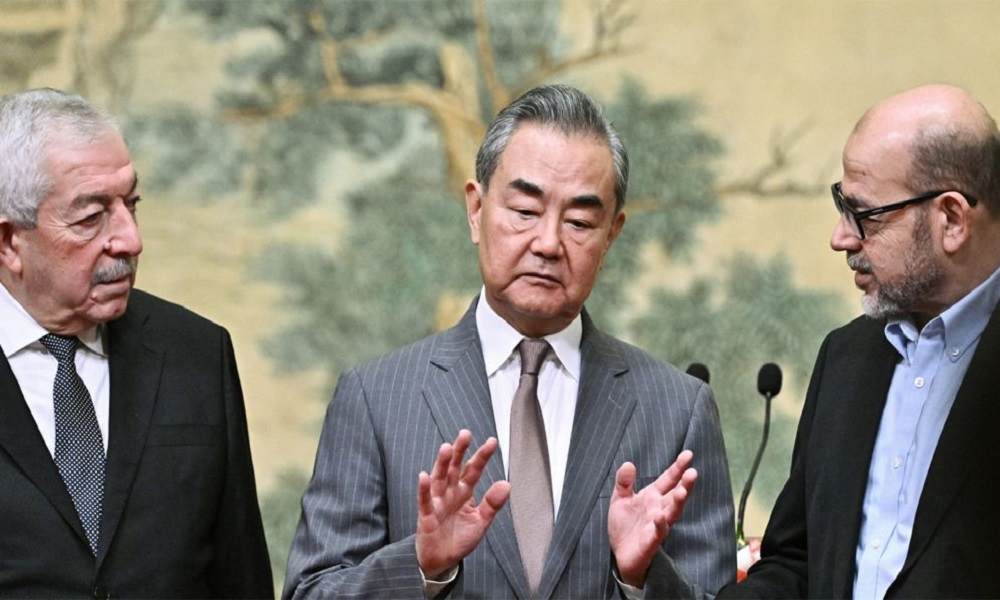
An example of this is that China recently hosted a discussion in Beijing between two rival Palestinian groups, Hamas and Fatah. China also issued a joint statement with Arab states, calling for a comprehensive, permanent and speedy solution to the Palestinian issue.
In addition, China’s economic cooperation with the Arab world is increasing by increasing investments in oil, gas and renewable energy sectors.
According to an article in TRT Wald, China is in favor of an Israel-Palestine two-state solution for two broad reasons. The first is to achieve diplomatic success and the second is to achieve economic interests. Beijing knows very well that without the two independent states of Israel and Palestine, a permanent solution to the long-standing Middle East crisis is not possible. And Beijing will not be able to achieve its desired success by keeping the conflict alive.
Beijing is keen to present itself as an effective mediator in the Middle East to achieve its diplomatic goals, and for this reason China views the outcome of the two-state solution as important. China scored a diplomatic victory last year by brokering a historic peace deal between Iran and Saudi Arabia.
However, Beijing’s efforts to strengthen regional and international peace and security have not yielded the desired results. For example, the promises made by senior officials of Saudi Arabia, China and Iran in a tripartite statement in March last year have not yet been fully implemented.
However, if China is able to resolve the Israel-Palestine issue through diplomatic efforts, the whole situation may change. Because Israel’s military aggression and occupation of Palestine is seen as a complex problem in the Middle East for a long time. At the same time, the US has come under more criticism from Arab countries than ever for supporting the bloody Israeli offensive in Gaza.
China hopes that Washington’s failure in establishing peace in the Middle East can fill the void. In this case, Beijing will keep Palestinian interests and the two-state solution at the center of the discussion. China’s recent vocal support for Palestinian national rights and the establishment of a sovereign state along the 1967 borders proves it.
Beijing’s support for a permanent ceasefire and Palestinian membership in the UN is closely aligned with Arab states’ views on normalizing relations with Israel. Now if the Arab states can play a strong role behind China-backed international peace efforts on Palestine, Beijing can strengthen the regional consensus on a Palestinian state, which is not dependent on the support of the US government.
China’s involvement in the Palestinian issue has had mixed reactions in the international arena. For example, the Arab states overwhelmingly support the Chinese position on the two-state solution, and even the Arab world has supported the call for an end to the Israeli occupation. Russia has also supported China’s position in the United Nations. But Washington and many Western powers continue to try to prevent China from becoming directly involved in the Gaza issue.
On the other hand, China’s economic and development as well as economic and development interests lie behind the peace building project in Gaza. For example, China is working on expanding its Belt and Road Initiative or BRI project in the Middle East. BRI is a comprehensive infrastructure and trade connectivity project – linking several ports along strategic waterways.
Israel’s war in Gaza has exposed the insecurity of interregional trade corridors. This risks disrupting long-term investments in various port, energy and transit infrastructure under the BRI scheme. Even shipping costs have already increased to sea ports.
Given these increased costs, China and Arab countries have taken on a difficult challenge in supporting a two-state solution. But even then, the prospect of a two-state solution aimed at establishing a just peace in the context of Israeli settlement expansion and aggression on Palestinian land remains remote.
Both sides recently green-lighted an action plan to increase development cooperation in sectors such as investment, infrastructure and energy.
Over the past several years, Beijing has emerged as the top trading partner of the Arab states. In 2023, the annual trade volume will increase to about 400 billion dollars. A permanent solution to the Israeli-Palestinian problem is, of course, crucial to avoid the spread of future conflicts and the risk of wider regional war.
But despite Beijing’s support for a two-state solution, the country’s influence is limited. Because first, the Arab states will not completely withdraw from Washington’s involvement in any kind of understanding on the Gaza war. Second, the US will prioritize Israel’s interests in any de-escalation or peace efforts.
In this regard, US President Joe Biden’s three-phase ceasefire plan can be looked at. There have been proposals for a permanent cease-fire process, but Israel is under virtually no obligation to abide by that proposal. As a result, Washington’s strong support for Israel poses a unique challenge to China’s efforts to emerge as the center of attention for an independent Palestinian state.
Moreover, the feasibility of a two-state solution is also questionable. Israeli Prime Minister Benjamin Netanyahu is a staunch opponent of an independent Palestinian state. Again, Washington’s efforts to advance any process toward a complete end to the Israeli occupation have been minimal. At the same time, Israel’s illegal settlements on Palestinian land are getting longer and longer. which undermines the credibility of the two-state solution.
Again, despite Israeli aggression, it is clear that Palestinian rights and freedoms cannot be completely ignored. Naturally, the movement for a two-state solution is important in opening up those discussions about the future of the Palestinians.
On the security front, the United States enjoys a significant advantage over Arab countries. In April, Washington hosted a high-level security meeting in Saudi Arabia. Officials from Saudi Arabia, Britain and Qatar were present there. The ceasefire issue in Gaza was widely discussed in the meeting.
Qatar and Egypt support Washington’s guidelines for a ceasefire in Gaza. But at the same time, the United States is giving strong support to Israel. When this is the case, it will be difficult to balance the expectations of China as a contender to solve the two-state problem in the Middle East.
So it can be said that Beijing’s pursuit of a permanent solution to the long-standing problems in the Middle East is beneficial for itself, Palestine and the region at large. Because China wants to protect its economic interests in the long term through a two-state solution, it also aims to expand its peace-building influence.