


Tag: Muslim

  • In India’s deportation drive, Muslim men recount being tossed into the sea

    In India’s deportation drive, Muslim men recount being tossed into the sea

    India is continuing its drive to deport alleged ‘illegals’ into Bangladesh, targeting primarily Muslim people and often forcing them out of the country at gunpoint with no legal processes.

    The continuing efforts of India’s right wing Hindu nationalist party, the BJP often involved inhumane methods of deportation while also destroying proof of Indian citizenship, says the Washington Post.

    The investigation led by the Washington Post has uncovered many stories of the ongoing suffering Muslim people are enduring in India, such as with Hasan Shah who was taken from his home by Indian police in western India one morning in late April. Later, he said, officers bound his hands with rope, placed a blindfold over his eyes and put him on a boat bound for Bangladesh.

    After three days at sea, Shah said, they stood him on the edge of the vessel with a life vest, untied his hands, uncovered his eyes and gave him a final order at gunpoint: “Jump into the water,” Shah remembered the officers saying.

    “If you look back, we’ll shoot you.”

    Shah said he swam to dry land, where he was picked up by the Bangladeshi coast guard and taken to the city of Satkhira, in the country’s southwest, an account corroborated by the coast guard. The documents proving his Indian citizenship were snatched by police when they detained him in his hometown of Surat in India, Shah said. He is stranded now in a foreign country, effectively stateless, separated from his wife and four children who rely on his meager income as a waste picker.

    “This isn’t my home,” he said near the steps of a courthouse in Satkhira. “I need to go back to India. I need to get back to my kids.”

    He is one of thousands of people, most of them Muslims, who have had their lives upended by the Indian government after an April attack by militants killed 26 people in the Himalayan vacation town of Pahalgam, in Indian-administered Kashmir. As sectarian tensions swelled across India, Gujarat’s home minister, Harsh Sanghavi, pledged to root out “each and every infiltrator.”

    Officials ordered raids in slums populated by Muslim laborers, branding most of those detained as illegal immigrants from Bangladesh who posed a threat to national security. While some of those targeted lacked legal status, many appeared to be Indian citizens; others were legal residents after living in the country for decades, family members said.

    Shah said he was born in Gujarat, and his family hails not from Bangladesh but from the Indian state of West Bengal. Shah’s mother provided copies of two of her son’s Indian national identity cards, a voter registration document and a marriage certificate. The Washington Post verified that he is registered to vote in Indian elections. His mobile phone, which is required for the two-step authentication process to verify his identity cards, is held by police, Shah said.

    The deportation drive targeting India’s Muslim minority was marked by mass home demolitions, arbitrary detentions, allegations of beatings and a lack of due process, according to interviews with Bangladeshi officials and more than 50 people swept up in the dragnet, as well as a Post review of government data, court documents and video footage, reports the Washington Post.

    The crackdown — led by police, cheered by local leaders and blessed by the courts — was most severe in the northeastern Assam state and the western state of Gujarat. Both are governed by politicians from the Bharatiya Janata Party, the right-wing Hindu nationalist party led by Indian Prime Minister Narendra Modi.

    Between May 7 and July 3, 1,880 people were deported from India to Bangladesh, according to private Bangladeshi government data obtained by The Post. Between May 7 and June 17, 110 people were logged by border officials in Bangladesh as Indians who were wrongly deported and sent back, a separate document showed. It is unclear how many claimed Indian citizenship or residency but lacked the documentation to prove it.

    Eleven people interviewed by The Post said they were detained by Indian police without being given a chance to provide proof of their legal status. Several said that their original identity documents were taken during deportation raids and that copies they subsequently provided were written off by officials as forgeries.

    Video footage obtained by The Post, corroborated by witness accounts, provides a window into the treatment of deportees by Indian security forces. One shows an elderly woman left at a northern Bangladeshi border outpost begging to remain in India. She was accepted back into the country but has gone missing, according to family members.

    Bangladesh has sent a series of diplomatic communications to India about its recent deportations and discussions on the matter remain ongoing, according to the Bangladesh High Commission in India.

    India’s Ministry of External Affairs and Border Security Force did not respond to requests for comment.

    The deportation drive “does not just violate civil rights,” said Mohsin Alam Bhat, a human rights expert and lecturer in law at Queen Mary University of London. “It clearly violates international law,” he said.

    ‘Keeping Muslims in line’

    Since India achieved independence in 1947, the country’s Muslims have faced persecution, prejudice and discrimination, according to human rights groups. Now making up an estimated 15 percent of the population, Muslims have routinely been demonized by right-wing Hindu politicians during moments of domestic turmoil, labeled infiltrators, and subjected to mass arrests, property destruction and police brutality, reports the Washington Post.

    In Gujarat — a cradle of far-right Hindu nationalism where Modi began his political rise — Sanghavi, the home minister, said after the attack in Kashmir that police had been tasked with ensuring that “no illegal immigrants from any country reside in our state,” citing directions from national security meetings chaired by the prime minister.

    In one late April raid in the largely Muslim shantytown of Chandola Lake in Ahmedabad, 890 people were detained, including 219 women and 214 children, according to the People’s Union for Civil Liberties (PUCL), an Indian human rights organization.

    Many were made to march for hours to the police station in the sweltering heat while news crews filmed, according to videos and interviews. Most detainees were ultimately released; it’s unclear how many were deported. Sanghavi praised the police for conducting a “historic operation.”

    Over the next roughly two weeks, Ahmedabad city workers bulldozed some 12,500 homes in Chandola Lake, according to municipal officials, leaving thousands of families homeless. Gujarat officials argued before the state’s high court that it was necessary to regulate areas “encroached upon by illegal immigrants” in the interest of “protecting national security,” according to a sealed court filing obtained by The Post. The high court allowed the demolitions to proceed, citing Supreme Court precedent.

    Yunus Khan Pathan, a Muslim day laborer, was detained by police during the April raid and made to march until the soles of his feet burned, he said. He was eventually released from custody, but his house in Chandola Lake was bulldozed. Pathan said he was born and raised in Ahmedabad. The Post verified a copy of his national identity card.

    “Prove that I’m a terrorist,” he said. “All I have is a Muslim name.”

    It remains unclear how many people rounded up were in the country illegally, with activists putting the number at about 50. But few spoke out against the raid for fear of being branded “anti-nationalist,” said Mujahid Nafees, general secretary of the PUCL’s Gujarat chapter.

    “The public opinion is: ‘They are keeping Muslims in line,’” he said.

    Ahmedabad’s city police and Gujarat state police did not respond to requests for comment.

    ‘They beat me brutally’

    Abdur Rahman, 20, said he was snatched from his bed in Chandola Lake at about 4 a.m. on April 26. Police showed no warrant and gave no reason, he said. During his 15 days in prison, Rahman said police whipped him repeatedly with a leather belt and forced him to say he was from Bangladesh. At first he refused, he said, but he ultimately gave in when the pain became too much.

    Rahman said he was blindfolded and put on an airplane — to where he doesn’t know — and then loaded onto a ship that smelled of dirty water. For three days, he said, security forces assaulted him with steel pipes and wires. His torso, which he showed to a Post reporter, still carries dark purple marks from the journey, reports the Washington Post.

    “They beat me brutally,” he said. “I felt like we all were going to die.”

    Rahman, like Shah, said he was given a life vest and pushed off the boat. Both recounted swimming for roughly 10 minutes before reaching a stretch of beach in the Sundarbans mangrove forests — an area that straddles eastern India and southern Bangladesh.

    The men described walking toward the blinking red lights of a cellphone tower. Along the way, both came across locals who called Bangladeshi officials, and soon after, the coast guard took them to Satkhira. Now they face the daunting challenge of proving they belong in India, even though their original identity documents were destroyed by police, they said.

    Rahman’s father provided a copy of his son’s national identity card and a school certificate that denoted his birthplace as Ahmedabad. The Post verified that Rahman’s identity card and school certificate were authentic.

    Regardless of whether or not the deportees are citizens, the methods used by India to ship them off — without an official treaty of deportation with Bangladesh or time for due process — are a violation of international law, said Rudabeh Shahid, a nonresident senior fellow at the Atlantic Council and an expert on South Asian immigration issues. The coordinated nature of the campaign, she added, beginning with home demolitions and arrests and culminating in beatings and forced expulsions, makes one thing clear.

    “You want a whole group to disappear,” Shahid said. “I have no other ways to describe this.”

    ‘I have only one life’

    Not all deportees are taken by sea.

    When India wants to push people across its land border with northern Bangladesh, authorities turn the floodlights off at night, said Lt. Col. Mehedee Imam, a battalion commander with Bangladesh’s border guard in the city of Lalmonirhat.

    Under the cover of darkness, Imam said, Indian forces tell detainees to walk across the 150 yards of verdant no-man’s-land between the countries’ respective border fences. India’s border guards outnumber their Bangladeshi counterparts by a ratio of 3 to 1, Imam added, which makes it difficult to catch them in the act, reports the Washington Post.

    It is unlawful, Imam said, to just “abandon them in the forest,” noting that there is an established process in place for Indian and Bangladeshi forces to verify a person’s nationality.

    Misma Khatun, 72, was dropped off near Imam’s border post on May 28, Imam said.

    A video obtained by The Post shows her pleading with Indian forces not to leave her in Bangladesh. “I have only one life,” she said, dropping to the ground in her blue sari.

    Khatun told the Indian guards she was from Assam, that she had lived there her entire life and that her identity cards were back at home.

    Ultimately, Imam said, India allowed her to reenter the country the same day. But her family has heard nothing from her since. Her son, Abdul Suban, said he calls police and Indian border security every day; he has been told her whereabouts are unknown.

    “I don’t even know if she is alive,” Suban said. “How does this happen?”

  • Korean man opens musalla at home to serve Muslim migrant workers

    Korean man opens musalla at home to serve Muslim migrant workers

    SEOGWIPO, Jeju: On the southern coast of Jeju Island, far from the honeymoon resorts and tourist beaches, a modest home near a fishing village has quietly become a spiritual refuge for a largely invisible community: Muslim migrant workers.

    Step past the shoe rack and the quiet hum of a record player, and you will find a small musalla. Clean, carpeted and softly lit, the space offers something rare for Muslims living on South Korea’s remote holiday island: a place to pray, rest, and feel recognized.

    The prayer space was created by Nasir Hong-suk Seong, 35, a Korean fish farm operator who converted part of his home into a musalla after moving to Jeju earlier this year.

    The island’s only masjid is in Jeju City, more than an hour by car from the southern coast where most migrants work in fisheries.

    “Fish farm workers are on call 24 hours, so they can never make the time to go to the masjid for Jummah prayers,” Seong told Arab News.

    “When I first arrived, I asked where they prayed. I was very sad when I heard it was almost impossible for them to attend Friday prayers and that they mostly prayed in the corner of their small dorm rooms.”

    Often called the “Hawaii of South Korea,” Jeju is better known for its volcanic peak and tourist beaches than for labor migration. Yet, the island’s economy has been increasingly reliant on migrant workers, many of whom are Muslim men coming mainly from Indonesia, Pakistan and Sri Lanka.

    Jeju Province officially recorded 3,567 migrant workers in 2024. Seong estimates that in his region alone, 300 fish farms employ about 1,500 of them, with half identifying as Muslim.

    Seong moved to Jeju from the port city of Incheon, where he used to run a guesthouse and often hosted Muslim guests. Getting to know them helped him see through the negative stereotypes of Islam in the West, and in 2023 he converted to the Muslim faith.

    “About 30 percent of my guests were from Muslim-majority countries. As I got to know them through hosting, they turned out to be incredibly kind and respectful,” he said.

    “There are so many people who misunderstand the religion. I think when people talk about Islam in Korea, they think of something foreign, something unknown. But it can be as simple as taking care of your neighbors.”

    Such, too, was the purpose of Seong’s musalla. He spent a month preparing it at the home belonging to his grandfather. Starting in March, he spent all his after-work hours furnishing the space.

    “When I moved in, I had nothing. Not even furniture or a pillow. This musalla was the first thing I made,” he said.

    “I always keep it open. People can come for group prayer anytime … and seeing them pray here makes me happy.”

    Modest but maintained with care, the musalla is fitted with prayer rugs lined on the floor. A low shelf holds editions of the Qur’an in English, Arabic and Korean. Arabic calligraphy decorates the walls. A handmade qibla sign marks the direction of prayer.

    Khalid Hussein, a 38-year-old from Pakistan, has been working in Jeju for the past 15 years. Employed at Seong’s fish farm, he has been visiting the musalla regularly, also to be in touch more with his identity.

    “It became easier for us,” Hussein said.

    “Jeju is 100 percent different. The culture, religion — everything is different. So, we need to compromise.”

    He was at the musalla with his colleague, Zahaid Hussain, who also came from Pakistan on a contract that brought him to Jeju.

    “I felt good when I was finally able to offer Friday prayers,” Zahaid said. “I was happy.”

  • 21 Arab, Muslim nations condemn Israeli airstrikes on Iran, urge immediate de-escalation

    21 Arab, Muslim nations condemn Israeli airstrikes on Iran, urge immediate de-escalation

    In a strong display of regional unity, 21 Arab and Muslim countries have jointly condemned Israel’s recent airstrikes on Iran, calling for an urgent de-escalation of hostilities and renewed commitment to international law and nuclear disarmament.

    According to Egypt’s state-run news agency MENA, the joint statement was issued yesterday (16 June) following an initiative by Egyptian Foreign Minister Badr Abdelatty, after extensive consultations with his counterparts across the Middle East, North Africa, and South Asia.

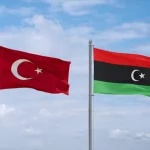
    Countries that endorsed the initiative include Turkey, Jordan, the United Arab Emirates, Pakistan, Bahrain, Brunei, Chad, Gambia, Algeria, Comoros, Djibouti, Saudi Arabia, Sudan, Somalia, Iraq, Oman, Qatar, Kuwait, Libya, Egypt, and Mauritania.

    The foreign ministers collectively condemned the Israeli attacks on Iranian territory, describing them as “flagrant violations” of international law and the UN Charter, reports Anadolu.

    The statement stressed the importance of respecting national sovereignty, territorial integrity, and the principles of good neighbourliness.

    The ministers voiced “deep concern” over the rapidly intensifying conflict, warning of potentially devastating implications for the security and stability of the wider region. They called for an immediate cessation of Israeli military operations against Iran and advocated for a comprehensive de-escalation initiative, including efforts toward a ceasefire.

    The call for calm comes in the wake of Israel’s coordinated airstrikes on Friday targeting Iranian military and nuclear sites.

    In response, Tehran launched a series of retaliatory missile attacks.

    Israeli authorities have reported at least 24 deaths and hundreds of injuries from Iran’s counterattacks. In contrast, Iran claims that over 224 people have died and more than 1,000 have been injured in the Israeli strikes.

    Why it matters

    This unified call for calm — even from countries with strained ties to Iran or friendly relations with Israel — underscores growing alarm that the escalating conflict between Israel and Iran could destabilise the entire Middle East.

    Many of the nations involved are US allies and emphasised that the only viable path forward regarding Iran’s nuclear program is a return to negotiations, reports Newsweek.

    The conflict has already disrupted nuclear diplomacy between Tehran and Washington and impacted regional air traffic, particularly over Gulf states.

    What to know

    The Muslim-majority nations expressed “categorical rejection and condemnation” of Israel’s airstrikes since 13 June 2025, warning of the “unprecedented escalation of tensions” in the region due to what they described as Israel’s ongoing military aggression against Iran.

    Israel has expanded its offensive, targeting Iranian missile sites, nuclear research facilities, and reportedly high-level scientists and military officers. Prime Minister Benjamin Netanyahu has defended the strikes as a “preemptive measure” to prevent Iran from acquiring nuclear weapons.

    In response, Iran has launched multiple waves of missile attacks into Israeli territory, intensifying fears of a prolonged war. Iran has maintained that its nuclear program is for peaceful, civilian purposes.

    The joint statement called for all regional nations to commit to the Treaty on the Non-Proliferation of Nuclear Weapons (NPT), specifically pointing out that Israel has not signed the treaty and is widely believed to possess nuclear arms.

    Yesterday evening, US President Donald Trump issued a stark warning, saying, “Everyone in Tehran should immediately evacuate,” emphasising the need to stop Iran from developing nuclear weapons.

  • India’s Hindu nationalist BJP seeks Muslim ‘friends’ for 2024 election

    India’s Hindu nationalist BJP seeks Muslim ‘friends’ for 2024 election

    New Delhi: Nafis Ansari, a school principal who is Muslim, was enlisted this year by the ruling Hindu nationalist Bharatiya Janata Party (BJP) as a “Modi Mitr”, or friend of Indian Prime Minister Narendra Modi.

    The resident of the central state of Madhya Pradesh promotes the party to neighbours and relatives at events such as weddings and tea sessions at friends’ homes. He speaks about how the BJP’s welfare policies benefit all communities, and talks up India’s status as a rising global power under Modi.

    Ansari is one of more than 25,000 Muslims who is volunteering to help Modi win a third term in elections due by May, BJP officials told Reuters. The party looks for community leaders like educators, entrepreneurs, clerics and retired government employees willing to “objectively” assess Modi, said Jamal Siddiqui, head of the BJP’s minorities unit.

    Reuters interviewed five Modi Mitrs and six BJP officials responsible for election strategy, who said the party hopes to use its economic record and its plans to introduce religion-agnostic laws on inheritance and gender rights to win over underprivileged Muslim voters, including women, in 65 key seats.

    Specifics of the BJP’s Muslim outreach strategy, such as the messaging it is using to target voters in these seats, have not been previously reported.

    The campaign is part of a larger push to woo India’s 200 million Muslims, with whom the BJP and Modi have a long and fraught history.

    Muslims and rights groups allege some BJP members and affiliates have promoted anti-Islamic hate speech and violent vigilantism, targeted non-profits run by other religions with regulatory action, and demolished Muslim-owned properties.

    Modi denies religious discrimination exists in India. Violence between Muslims and the Hindu majority is “deep-rooted” but only makes headlines now because political rivals use it to target the party when it holds power, said senior BJP leader Syed Zafar Islam, who is Muslim.

    The prime minister leads in the polls, but a newly unified opposition alliance and a recent loss in a key state election have left party leaders worried about an anti-incumbent vote and fearful the BJP has maximised support in its Hindu nationalist base, analysts and opposition leaders said.

    “Until you know us, you won’t recognise us. Until you recognise us, (we) won’t become friends,” said Siddiqui of the party’s Muslim outreach.

    ECONOMY-FIRST AND MUSLIM VOTERS

    The BJP’s website states that secularism in India has become “minority appeasement … at the cost of majority”. Some analysts say the party has politicised faultlines between Hindus and Muslims to such an extent that Modi’s cabinet doesn’t have a single Muslim minister.

    The party sporadically sought Muslim support in past regional polls, but this national campaign is the first and most widespread of its kind, according to Siddiqui and Hilal Ahmed, an expert on Muslim politics at the Centre for the Study of Developing Societies, a Delhi-based think tank.

    The BJP, which won about 9% of the Muslim vote in the past two national elections, is targeting between 16% and 17% next year, said Yasser Jilani, spokesperson for its minorities unit.

    Two officials told Reuters the BJP is focused on 65 seats in the 543-member lower house of parliament that have a Muslim voter population of at least 30%, roughly double their share of the national population. They shared details of internal party strategy on condition of anonymity.

    The BJP currently holds about two dozen of the seats, according to party officials, who declined to provide specific details on the exact seats being targeted.

    Modi Mitr outreach focuses on spreading the BJP’s economic message especially to “Pasmanda” Muslims, an Urdu term for marginalised members that make up a majority of that religious community.

    Ansari, who is Pasmanda, talks to Muslim friends and neighbours at gatherings about new programmes such as a 1,250 rupee ($15) monthly handout for underprivileged women from BJP-run state authorities and a 150,000 rupee housing subsidy launched by the central government.

    “BJP’s welfare schemes are helping everyone, including Muslims,” he said.

    Ujir Hossain, a Modi Mitr businessman in West Bengal, also spreads an economy-focused message when he visits his neighbour Mohammed Qasim’s grocery shop. Hossain said he was attracted to the BJP because there is a “sky and earth difference” between Modi’s accomplishments and those of the previous centre-left government.

    “Of course, Muslims don’t like Modi’s party but Hossain Dada tells us at least we should listen to what BJP has to offer too,” said Qasim, using a Bengali honorific for “elder brother”.

    “The BJP has never respected and addressed the concerns of this section of society and instead marginalized them systematically,” said K.C. Venugopal, a senior lawmaker with the opposition Congress party that held power immediately before Modi.

    Asked about the allegations of minority appeasement, he said that Congress doesn’t pursue a strategy of divide and rule: “Elections should be fought on economic and development issues not on the basis of religion and identity.”

    BJP leaders such as Islam, a former India head of Deutsche bank, said the opposition has taken Muslim votes for granted and neglected their welfare.

    “We have a long way to go, the gap is too steep but it’s getting bridged,” he said.

    Among Muslim women, the BJP promotes its pledge to reform personal laws. Supporters of the plan, including some Muslim women’s rights groups, say it will end religious practices on marriage age, polygamy and inheritance that are discriminatory toward women.

    “You can criticise BJP for a lot of other things but I don’t think anyone apart from this government has the willingness to reform personal laws,” said Amana Begam Ansari, a female Pasmanda writer and political analyst, who is not related to Nafis Ansari.

    “EXTREMISTS EVERYWHERE’

    Violent clashes between Hindus and Muslims have become less frequent since the BJP took power, according to government data, but tensions remain high. In government, the BJP has frequently used enforcement powers to try and prevent inter-communal tensions from spilling into outright violence due to concerns about its law-and-order message and India’s international reputation, some analysts say.

    Many Muslims say they live in fear of Hindu activists emboldened by the BJP’s politics of cultural nationalism, according to community leaders and foreign researchers. Critics consider such nationalism a euphemism for Hindu supremacy.

    Opposition leaders and analysts such as Ahmed, the politics expert, said the BJP is likely to make gains with Muslims next year unless it is countered by the opposition.

    The BJP has a dual strategy of “demonising Muslims” for its hardline base and wooing sections of the Muslim population, said Ahmed.

    “The demonisation of Muslim men will continue but a soft corner will be shown to Muslim women,” he said. “Similarly … (there will be) some positivity shown to Pasmandas.”

    Ghanshyam Tiwari, spokesperson of the opposition Samajwadi Party, which has a large Muslim base, said the BJP’s position as the ruling party gives it the ability to make policies that can win over some Muslims.

    “But no matter what BJP does, it doesn’t change its core colours, core elements, which remain an anti-Muslim, anti-minority approach,” Tiwari said.

    Ansari, the Modi Mitr educator, said the BJP should control extremist activists who “ruin” its image but still backs the party.

    “There are extremists everywhere,” he said.

  • India’s Hindu children are being radicalised – will the country speak up?

    India’s Hindu children are being radicalised – will the country speak up?

    By Apoorvanand

    Apoorvanand teaches Hindi at the University of Delhi. He writes literary and cultural criticism.


    A Muslim friend from a town in the central Indian state of Chhattisgarh recently called, seeking counsel.

    His young daughter had told him the previous day that her friends refused to play with her any more – after they were warned by other children to stay away from her because of her religion.

    This is an experience most Muslims have gone through while growing up in India. They are familiar with anti-Muslim slurs and cuss words used against them. But something new is happening which is radically different from earlier times.

    Children march in the Hindu nationalist organisation Rashtriya Swayamsevak Sangh's uniform in Prayagraj, India, Thursday, October 22, 2015 [File: Rajesh Kumar Singh/AP Photo]
    Children march in the Hindu nationalist organisation Rashtriya Swayamsevak Sangh’s uniform in Prayagraj, India, Thursday, October 22, 2015 [File: Rajesh Kumar Singh/AP Photo]

    While the Indian media and politicians have long harped on the supposed dangers of radicalisation among Muslim youth, or of the threat of far-left propaganda, we are now witnessing the turbocharged expression of a reality the country has never confronted: the radicalisation of Hindu youth.

    It is an everyday radicalisation of young men and women who appear very normal, until they decide to target Indian Muslims and Christians.

    They are part of public, over-ground groups like the Akhil Bhartiya Vidyaarthi Parishad (ABVP), the student wing of the Rashtriya Swayamsevak Sangh (RSS); and the Bajrang Dal, the militant youth wing of the RSS. All of them are affiliates of the ruling Bhartiya Janata Party (BJP), which gives them political clout and a veneer of respectability.

    Members of the ABVP and the Bajrang Dal have been involved in numerous cases of physical violence against students and teachers, especially Muslims and Christians. Yet earlier this year, when the Congress party – the principal national opposition – declared that it would consider banning the Bajrang Dal if it came to power in the southern state of Karnataka, no less than Prime Minister Narendra Modi raised slogans in defence of the militant outfit.

    Recently, a video surfaced in India and went viral in which a young Hindu girl is seen singing “Desh ke gaddaron ko Goli maro …” (shoot the traitors of the country). She is surrounded by elders who are clapping and encouraging her.

    This slogan was made popular by a minister in the Modi government who was targeting Muslim women and men for protesting against the controversial new citizenship law passed in 2020 that discriminates against Muslim asylum seekers. The slogan has since been used in rallies and videos to target Muslims.

    This video encapsulates a reality that Hindus do not want to talk about. Another video of a school teacher asking her students to slap their Muslim classmate who had not done his homework made national news. Students came up one by one and hit the Muslim boy, as the teacher commented against his religion.

    We don’t know what impact this has had on the student who was struck and on his classmates, exposed to bigotry by their teacher at a young age. But we do know that there is an impact, more broadly, on the atmosphere that dominates today’s India.

    The principal of a prestigious school in New Delhi told me that some students raised the slogan “Jai Shri Ram” in their class. This slogan is used by the RSS to proclaim Hindu dominance. Their parents were called and counselled.

    Some students from another class went out to a park on Valentine’s Day and tried to bully couples sitting there. The celebration of Valentine’s Day is resented by Hindu supremacist groups. They threaten, harass, and beat up couples celebrating the day. It was disturbing for the teachers of this progressive, liberal school to find their students turning into volunteers of this radical ideology.

    Talking to teachers and principals, one realises that the radicalisation of young Hindus, while an ongoing process, has acquired dangerous proportions in recent years, fuelled by hate-mongering TV channels, internet platforms and WhatsApp groups that have been relentlessly spreading anti-Muslim propaganda. Sadly, in many cases, what these children hear at home and in their families reinforces the bigotry they are fed by their television and phone screens.

    Worried teachers struggle to deal with this phenomenon. For they too are vulnerable.

    A fact-finding report released by a recently formed group in Maharashtra called Women Protest For Peace found multiple instances where external groups were intervening in the state’s educational institutions to incite students “to deliberately target teachers on religious grounds”.

    Sadly, none of this is a surprise. In the last decade, it has become common to see adolescents, even children, brandishing swords and other weapons, raising hateful slogans targeting Muslims, and even vandalising mosques and Islamic shrines. Teenagers are seen in rallies organised by the Bajrang Dal.

    These young Hindus see that violence against Muslims and Christians is often celebrated or at least tolerated, sometimes approvingly, in their families and society. They observe that people who provoke and lead violence gain social and political respectability and get elected to state legislatures and parliament. They see that far from suffering consequences for hate speech and hate crimes, anti-Muslim and anti-Christian acts help those who carry them out.

    A major source of this hatred towards Muslims and Christians is the chain of educational institutions run by organisations affiliated with the RSS. Studies have been done examining the curriculum and activities of these institutions, and they reveal that they inculcate ‘nationalism’ in young minds, which is synonymous with anti-Muslim and anti-Christian hatred.

    Children are told that India has been the land of Hindus, which was infiltrated by Muslims and Christians. That Hindus have been the best in all aspects; that it was Muslim rule that degraded them and turned them into slaves; that the only way to reclaim the country’s past glory is by teaching Muslims and Christians a lesson.

    Tangible tasks are presented to Hindu youth as what they need to do to defend their faith. They are told that they must save cows from the cruelty of Muslims and Christians, establish Hindu dominance over Muslim neighbourhoods, and ‘save’ girls from ‘love jihad’ – a conspiracy theory that claims Muslim men are out to trap Hindu women in relationships with the aim of converting them to Islam.

    Scores of vigilante groups have mushroomed all over India, indulging in violence against Muslims under the pretext of protecting cows and Hindu women.

    Unfortunately, the radicalisation of Hindu youth often goes unnoticed as it is approved by their families, whom they see indulging in a range of aggressions against Muslims: It could be something as bizarre as protesting against their Muslim neighbours praying in their own houses.

    Once hatred is normalised, violence follows naturally.

    Yet while the BJP might benefit politically, the long-term consequences of this project will be borne by India’s Hindus, too. With homes and schools as the cradles of this radicalisation, a generation of Hindu children is being turned into unknowing criminals.

    The views expressed in this article are the author’s own and do not necessarily reflect Al Jazeera’s editorial stance.