




Continuous airstrikes in Syria after the fall of Assad, what is Israel trying to achieve?
Last Updated on December 11, 2024 6:31 am
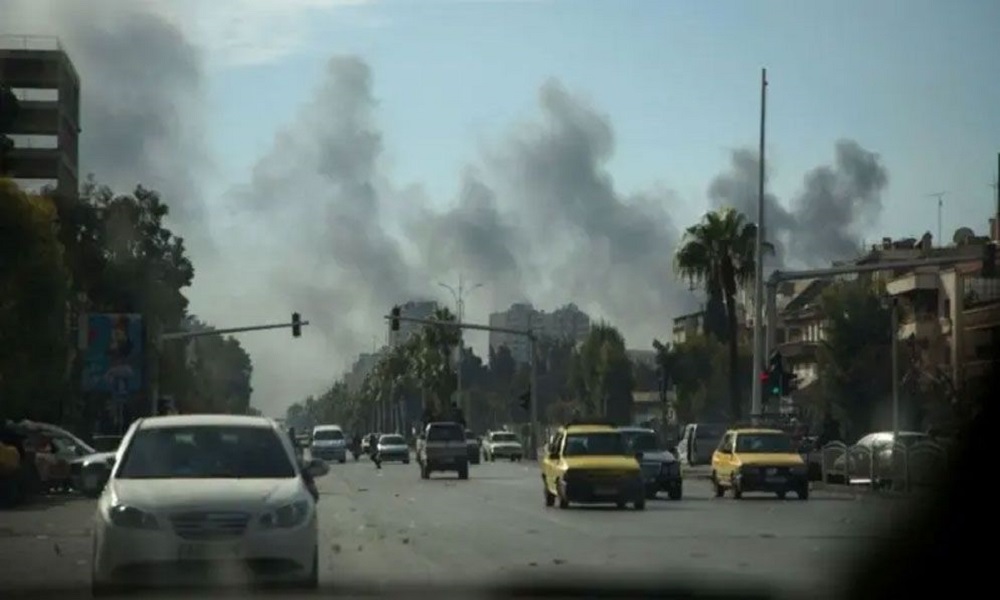
According to Syrian media reports, Israeli warplanes have carried out attacks on various parts of the country, including the capital Damascus.
The UK-based Syrian Observatory for Human Rights (SOHR) reported at least 100 strikes by Israeli aircraft on various military targets in Syria.
Local media also reported that a research center for the production of chemical weapons was among the places attacked.
Israel says that it has taken steps to prevent weapons from falling into the hands of extremists after the fall of the Assad government.
Meanwhile, the UN Security Council is going to meet to discuss the situation in the context of the fall of President Bashar al-Assad.
SOHR says that Israeli aircraft have carried out hundreds of attacks in Syria in the past two days. One of them is a site in Damascus that Iranian scientists used to develop rockets.
The attack comes as the UN Chemical Weapons Agency has warned that Syria must secure its chemical weapons stockpiles.
According to the UN Organisation for the Prohibition of Chemical Weapons (OPCW), a chemical weapon is defined as any chemical substance used intentionally to cause death or injury.
The use of chemical weapons is prohibited under international law, even against military targets, because they are spread out and not limited to specific targets.
It is not known how many or where Syria has chemical weapons. However, former President Bashar al-Assad is believed to have stockpiled such weapons. His declarations on this subject were also incomplete.
Syria signed the OPCW Chemical Weapons Convention in 2013. A month earlier, such weapons were used in a suburb of Damascus. The attack used a nerve agent. About 1,400 people were killed in the incident.
The horrific images of the attack shocked the world. Western powers have said only the government could have carried out the attack, but Assad has blamed the opposition for it.
The Syrian government’s declared stockpile of 1,300 tonnes of chemical weapons has been destroyed by the OPCW and the UN, but chemical weapons attacks continue.
A BBC analysis in 2018 confirmed that chemical weapons were used about 106 times in the Syrian civil war between 2014 and 2018.
On Monday, the OPCW said it had been in contact with Syria about the security of chemical weapons and facilities. Also on Monday, Israel released photos of its troops entering Syria’s buffer zone, where UN peacekeepers are stationed.
A day earlier, Prime Minister Benjamin Netanyahu announced that the Israeli army had temporarily taken control of the area. The Golan Heights are 60 kilometres southwest of Damascus.
Israel captured the Golan Heights during the Six-Day War with Syria in 1967 and unilaterally annexed it in 1981. The international community has not recognised this, but the United States did so in 2019.
Israel has taken fresh action after Syrian rebels seized Damascus and toppled the government of President Bashar al-Assad, who he and his father have ruled since 1971.
The Islamist opposition group led by Hayat Tahrir al-Sham, or HTS, entered Damascus on Sunday and declared Syria liberated on television. Netanyahu on Sunday called the day a historic day for the Middle East.
Assad’s government has been supported by Hezbollah and Russia in the country’s civil war. Hezbollah has been involved in the Israel-Gaza war and in clashes along the Israel-Lebanon border.
Russia has also stepped up its aggression in Ukraine. In this context, HTS and some rebel groups have been able to seize large parts of Syria.
Netanyahu said on Sunday that Israel would extend a hand of peace to Syrians who want to live in peace with Israel. Our desire is to establish neighborly and peaceful relations with the new Syrian forces. But if that is not the case, Israel will do whatever it takes to protect itself.
However, Israel will be wary of the Golan Heights, where HTS leader Abu Mohammed al-Jolani came from. Thousands of Israeli settlers live there. About twenty thousand Syrians also live in the area.
Israeli airstrikes in Syria are nothing new. They have links to Iran and Iranian-backed armed groups such as Hezbollah and have admitted to hundreds of attacks in recent years.
Israel has carried out frequent airstrikes in Syria since the start of the Gaza war in October 2023. Israel has carried out these strikes in Syria during counterattacks against Hezbollah and other groups in Lebanon and Syria.
Last month, the UK-based SOHR said it had carried out several airstrikes targeting Iranian-backed militia fighters in various locations near Palmyra. 68 Syrian and other foreign fighters were killed.