
Tag: Russia

  • Russia, Ukraine to tackle land dispute at UAE talks; no sign of compromise

    Russia, Ukraine to tackle land dispute at UAE talks; no sign of compromise

    Ukrainian and Russian negotiators will tackle the vital issue of territory during two days of talks in Abu Dhabi starting today (23 January), each side said, with no sign of a softening of their positions to end the four-year war.

    Ukraine is under mounting US pressure to reach a peace deal in the war triggered by Russia’s full-scale invasion in February 2022, with Moscow demanding Kyiv cede its entire eastern industrial area of Donbas before it stops fighting.

    Ukrainian President Volodymyr Zelenskiy said the territorial dispute would be a top priority of the next round of talks in the United Arab Emirates.

    “The question of Donbas is key. It will be discussed how the three sides…, see this in Abu Dhabi today and tomorrow,” he said, responding to questions in a WhatsApp media chat a day after talks with US President Donald Trump at the World Economic Forum in Davos that both leaders described as positive.

    The talks in the Gulf were due to begin on Friday evening, a Zelenskiy aide said, and resume on Saturday morning.

    Russian President Vladimir Putin’s demand that Ukraine surrender the 20% it still holds of the Donetsk region of the Donbas — about 5,000 sq km (1,900 sq miles) — has proven a major stumbling block to a breakthrough deal. Zelenskiy refuses to give up land that Russia has not been able to capture in four years of grinding, attritional warfare.

    Kremlin spokesman Dmitry Peskov said on Friday that Russia’s insistence on Ukraine yielding the Donbas was “a very important condition”.

    A source close to the Kremlin told Reuters that Moscow considers a so-called “Anchorage formula”, which Moscow said was agreed between Trump and Putin at a summit last August, to mean Russia controlling all of Donbas and freezing the current front lines elsewhere in Ukraine’s east and south.

    Donetsk is one of four Ukrainian regions Moscow said in 2022 it was annexing after referendums rejected by Kyiv and Western nations as bogus. Most countries recognise Donetsk as part of Ukraine. Putin says Donetsk is “historical” Russian territory.

    Security guarantees agreed, Zelensky says

    Zelenskiy said on Thursday in Davos that the Abu Dhabi talks would be the first trilateral meetings involving Ukrainian and Russian envoys and US mediators since the war began.

    Last year Russia and Ukrainian delegations had their first face-to-face meeting since 2022 when they met in Istanbul. A top Ukrainian military intelligence officer also had talks with US and Russian delegations in Abu Dhabi in November.

    Russian Admiral Igor Kostyukov, head of Russia’s military intelligence agency, was heading Moscow’s team in Abu Dhabi. Ukraine’s delegation was to be led by Rustem Umerov, secretary of Kyiv’s National Security and Defence Council.

    Zelenskiy also told reporters that a deal on US security guarantees for Kyiv was ready, and that he was only waiting on Trump for a specific date and place to sign it.

    Ukraine has sought robust security guarantees from Western allies in the event of a peace deal to prevent Russia, which has shown little interest in ending the war, from invading again.

    For its part, Russia has floated the idea of using the bulk of nearly $5 billion of Russian assets frozen in the United States to fund a recovery of Russian-occupied territory inside Ukraine. Ukraine, backed by European allies, demands that Russia pay it reparations.

    Asked about Russia’s idea, Zelenskiy dismissed it as “nonsense”. He added: “Of course, we will fight (to use these assets for Ukraine), and it is absolutely fair regarding the use of all frozen assets (by Ukraine).”

    Ukraine is enduring its harshest winter of the war as Russia inflicts heavy missile and drone strikes on its energy infrastructure. With temperatures well below freezing, hundreds of thousands of people in Kyiv and other cities have suffered long power cuts and been left without heating.

    Ukraine cites Russia’s escalating attacks on its energy grid as evidence that Putin has no real interest in peace.

    Russia says it wants a diplomatic solution but will keep working to achieve its goals by military means as long as a negotiated solution remains elusive.

  • Russia is preparing for contacts with the United States on Ukraine, the Kremlin says

    Russia is preparing for contacts with the United States on Ukraine, the Kremlin says

    MOSCOW: The Kremlin said on Thursday that Russia was preparing for contacts with the United States to get details about US talks with European powers and Ukraine on a possible peace settlement to end the Ukraine conflict.

    Politico reported that US and Russian officials are expected to meet in Miami at the weekend, and that the Russian delegation would include Russian President Vladimir Putin’s investment envoy Kirill Dmitriev.

    When asked about media reports about a meeting in Miami, Kremlin spokesman Dmitry Peskov told reporters that contacts were planned with the United States.

    “We are indeed preparing certain contacts with our American counterparts in order to receive information about the results of the work that the Americans have done with the Europeans and with Ukraine,” Peskov said.

    The United States has held talks with Russia, and separately with Kyiv and European leaders, on proposals for ending the war in Ukraine but no deal has been reached.

    Putin said on Wednesday that Russia would take more land in Ukraine by force if Kyiv and European politicians whom he cast as “young pigs” did not engage over US proposals for a peace settlement.

    European leaders say they stand with Kyiv and that if Russia wins in Ukraine then Moscow will one day attack a NATO member. The Kremlin has repeatedly dismissed claims that Russia would attack a NATO member as nonsense.

    Russia controls 19.2 percent of Ukraine, including the Crimea peninsula which it annexed in 2014, as well as most of the eastern Donbas region, much of the Kherson and Zaporizhzhia regions, and slivers of four other regions.

  • Russia is a threat that forced us to raise defence spending, Estonian foreign minister says

    Russia is a threat that forced us to raise defence spending, Estonian foreign minister says

    By Laura Zhou

    European countries have been forced to boost defence spending because of the “threat” from Russia, Estonian Foreign Minister Margus Tsahkna said as he wrapped up a visit to China where he called for the country to put more pressure on Moscow to end the war in Ukraine.

    In an interview with the South China Morning Post on Wednesday, Tsahkna said: “President [Donald] Trump has been very clear that Europe must put skin in the game. Europe must take more responsibility.”

    Trump had previously threatened to leave Nato unless other members raised defence spending.

    At a summit in The Hague in June, members of the alliance agreed to raise their spending on the military to 5 per cent of gross domestic product by 2035.

    Two months earlier, Estonia, one of the smallest Nato member states, passed a €2.8 billion (US$3.2 billion) bill that would see the proportion of GDP spent on the military rise from around 3.4 per cent to 5.4 per cent by 2029.

    Tsahkna said this was a decision European countries had to make despite concerns it would mean less money to spend on civilian matters.

    Source : SCMP

  • Russia Seeks to Reassert Role at Central Asia Summit, but Kazakhstan and Uzbekistan Push Their Own Agendas

    Russia Seeks to Reassert Role at Central Asia Summit, but Kazakhstan and Uzbekistan Push Their Own Agendas

    By Andrei Matveev

    The second Central Asia-Russia summit, held ahead of the Commonwealth of Independent States (CIS) leaders’ meeting, reaffirmed the Kremlin’s continued intent to assert influence over the region. Russian President Vladimir Putin used the platform not only to signal discontent with the pace of economic integration but also to critique the Central Asian republics for what he portrayed as insufficient engagement in bilateral trade.

    Despite growing ties between Central Asian states and external partners, exemplified by the “C5+1” dialogue format that includes major powers such as the U.S. and China, Putin made clear that Russia does not view its influence in the region as diminished.

    Opening the summit, Putin took a veiled swipe at the “C5+1” initiative, which has gained traction in recent years. “I am in constant contact with each of the Central Asian presidents,” he said, before adding, “But I am sure that this multilateral format of communication is also very useful and has its obvious ‘added value’, so to speak.”

    By “added value,” the Russian leader appeared to suggest that multilateral engagement enables Central Asian states to present a more unified front in foreign negotiations, an approach that complicates Moscow’s ability to exert influence through bilateral channels.

    Putin also expressed dissatisfaction with the current levels of mutual trade and Russian investment in the region. While acknowledging that trade between Russia and Central Asia had surpassed $45 billion, he pointedly compared this figure to trade with Belarus, which exceeds $50 billion despite its far smaller population.

    “Our trade turnover with Belarus exceeds $50 billion. Let me remind you that Belarus has a population of 10 million. Uzbekistan already has nearly 40 million, Tajikistan over 10 million, and Kazakhstan more than 20 million. Can you imagine what a colossal resource this is?” Putin said. “This means there are strong prospects for expanding our economic relations.”

    Putin described Russia’s current $20 billion in regional investments as inadequate and called for increased engagement, but also tempered expectations surrounding major infrastructure and logistics projects championed by Astana and Tashkent, while positioning Russia as a central player in their development. He proposed integrating existing North-South and East-West corridors into a unified Eurasian logistics network supported by digital and transport services.

    “This will allow us to significantly increase international transport volumes through our common region,” Putin said.

    Kazakh President Kassym-Jomart Tokayev responded directly, updating figures presented by Putin and reaffirming Kazakhstan’s commitment to regional integration. He noted that Russia’s total trade with Central Asia exceeded $50 billion in 2024, with $28 billion in trade between Russia and Kazakhstan alone.

    Tokayev emphasized the strategic importance of transport cooperation with Russia, stating that “Russia is a key gateway for the region’s countries to global markets. Therefore, cooperation in the transport and logistics sector is a matter of heightened strategic importance.”

    Tokayev outlined Kazakhstan’s existing transport infrastructure, eleven international corridors, including five rail and six road routes, that carry about 85% of land freight between Asia and Europe. Over 15 years, Kazakhstan has invested more than $35 billion in the sector. As a result, rail transit from Russia to Central Asia via Kazakhstan has risen 26% over three years, with traffic in the opposite direction growing by nearly 50%. Deliveries from Russia to China via Kazakhstan have tripled, exceeding five million tons.

    He proposed launching a joint Kazakh-Russian investment and infrastructure program for the eastern segment of the North-South corridor, with potential participation from international financial institutions. He also proposed forming a “Council for the Development of the Eurasian Route,” led by the heads of transport agencies, to coordinate initiatives and address logistical challenges.

    Uzbek President Shavkat Mirziyoyev also offered proposals, suggesting the creation of a Coordination Council at a deputy prime ministerial level to accelerate joint development projects. He further proposed establishing a unified transport and logistics network to integrate national programs in road, rail, and air transport. Mirziyoyev emphasized that closer coordination would help remove bottlenecks, speed up the implementation of regional agreements, and make Central Asia more competitive in global trade.

    Kyrgyz President Sadyr Japarov highlighted improved regional security since the first summit and reaffirmed Russia as a “key trade and economic partner.” He urged the removal of trade and transit barriers and backed faster progress on transport links connecting Russia with China and Iran. Japarov also pointed to Kyrgyzstan’s hydropower and renewable projects as opportunities for joint investment. Tajik President Emomali Rahmon, hosting the summit, stressed cooperation on trade and connectivity, while Turkmenistan’s President Serdar Berdimuhamedov emphasized his country’s engagement but did not announce major new initiatives.

    The Dushanbe summit highlighted both Moscow’s determination to remain a central partner for Central Asia and the region’s effort to diversify its external ties. Putin’s calls for deeper trade and investment underscored Russia’s intent to anchor its influence, while Tokayev and Mirziyoyev’s proposals reflected Central Asian leaders’ own ambitions to shape connectivity and development on their terms. Although Russia still plays a pivotal role in trade and infrastructure, the parallel growth of formats such as C5+1 and expanding ties with China, the EU, and others suggest that Central Asian states are increasingly seeking a balance – leveraging Russian partnership without relying on it exclusively.

  • India to strengthen cooperation with Russia after Modi-Putin talks in China

    India to strengthen cooperation with Russia after Modi-Putin talks in China

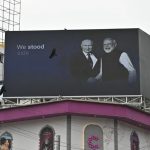
    NEW DELHI: India and Russia are exploring ways to deepen their cooperation, Prime Minister Narendra Modi said on Monday, after talks with Russian President Vladimir Putin in China.

    Modi and Putin were both in the northern Chinese city of Tianjin to attend the Shanghai Cooperation Organization’s leaders’ summit, where they underscored their friendly ties by traveling in one car to the meeting’s venue.

    Modi said on social media they had an “excellent meeting” and discussed “ways to deepen bilateral cooperation in all sectors,” including trade, space, and security.

    “We exchanged views on regional and global developments, including the peaceful resolution of the conflict in Ukraine. Our Special and Privileged Strategic Partnership remains a vital pillar of regional and global stability,” he wrote on X.

    In a video from the meeting, he said that “even in difficult times, India and Russia have walked shoulder to shoulder” and that their close relationship is important not only for the two countries, “but also for global peace, stability, and prosperity.”

    He also invited Putin to visit New Delhi in December to take part in the India-Russia Annual Summit, which is a key a platform of the Special and Privileged Strategic Partnership.

    The meeting with Russia’s leader followed Modi’s one-on-one with Chinese President Xi Jinping a day earlier, marking a thaw in relations between the Asian giants that were locked in a years-long standoff over their disputed Himalayan border.

    The breakthrough with China and plans of increased cooperation with Russia form the backdrop to India’s souring relations with its main partner, the US, after the Donald Trump administration imposed a 50 percent duty on Indian goods as punishment for buying Russian oil.

    The White House last month alleged that New Delhi’s oil purchases were indirectly helping to fund Russia’s war in Ukraine.

    This week’s meetings with Xi and Putin show efforts to recalibrate India’s foreign policy, which over the past few years was strongly US-oriented.

    “This is important because this is a kind of departure from the policy that we have been pursuing with the US for the last 20 years,” Prof. Rajan Kumar from the Centre for Russian and Central Asian Studies, Jawaharlal Nehru University, told Arab News.

    Modi’s engagements at the Shanghai Cooperation Organization meeting sent a “clear and loud message” to the US and other Western powers that India would pursue a policy of multi-alignment, he said.

    “It will have its ties with the US, but also it will not disrupt its ties with Russia, China, and other countries just because the US would like India to behave in a certain way.”

  • Revived Silk Route allows US to steam ahead of China, Russia in South Caucasus

    Revived Silk Route allows US to steam ahead of China, Russia in South Caucasus

    By Tom Hussain

    The shortest Silk Route between China and Europe is set to reopen for the first time since the collapse of the Soviet Union, following last Friday’s agreement between Armenia and Azerbaijan to end the conflict that had been blocking the way.

    Ironically, the obstacle was cleared by China’s nemesis, United States President Donald Trump: his administration’s involvement was key to pushing the framework peace deal across the finishing line.

    Shoehorned last minute into negotiations by Azerbaijan’s close ally Turkey, the US took on the role of security guarantor for Armenia in return for a lease to develop and operate the so-called Zangezur Corridor, a route linking Azerbaijan to its Karabakh enclave via a strip of Armenian territory bordering Iran.

    Dubbed the Trump Route for International Peace and Prosperity, the proposed project represents the first major US involvement in the South Caucasus since a 1994 contract with an international consortium that set Azerbaijan on the path to becoming a major oil and gas exporter – via pipelines through Turkey, rather than Iran or Russia.

    Briefing journalists, a White House official said “the losers here are China, Russia and Iran”.

    Eurasia experts, however, said that the deal was not viewed in such binary terms by Armenia and Azerbaijan.

    Source : SCMP

  • Putin meets with US envoy in the Kremlin

    Putin meets with US envoy in the Kremlin

    RUSSIAN President Vladimir Putin held talks with US President Donald Trump’s special envoy Steve Witkoff in Moscow today, the Kremlin said.

    The meeting between Mr Putin and Mr Witkoff lasted about three hours, and neither side gave an immediate briefing on the talks.

    The meeting comes days before the White House’s deadline for Russia to reach a peace deal with Ukraine or potentially face further economic penalties that could also hit countries buying its oil.

    Overnight from Tuesday to Wednesday, Russian forces hit a leisure centre in Ukraine’s southern Zaporizhzhia region, killing two people and injuring 12, including two children, regional Governor Ivan Fedorov said today.

    Russian forces launched at least four strikes on the area and initially attacked with powerful glide bombs.

    “There is zero military sense in this strike. Only cruelty to intimidate,” Ukrainian President Volodymyr Zelensky said in a post on Telegram today.

  • Russia protests to Israel over alleged attack on diplomatic vehicle

    Russia protests to Israel over alleged attack on diplomatic vehicle

    Russia lodged a formal protest to Israel following an alleged attack on a Russian diplomatic vehicle near the settlement of Givat Assaf near Jerusalem, according to a statement issued by the Russian foreign ministry.

    “On July 30, a vehicle of the Russian Federation’s mission to the Palestinian National Authority, bearing diplomatic license plates and carrying personnel of the Russian diplomatic mission accredited by Israel’s Foreign Ministry, was attacked near the illegal Israeli settlement of Givat Assaf, near Jerusalem, by a group of settlers,” Russia’s foreign ministry spokeswoman Maria Zakharova said in a statement.

    The incident occurred “with the acquiescence of Israeli military personnel, who were present at the scene and did not attempt to stop the attackers’ aggressive actions”, she added.

    Reuters was not able to independently verify the Russian foreign ministry’s report.

    Zakharova said the Russian embassy in Tel Aviv had submitted an official demarche to Israeli authorities.

  • Top Trump aide Stephen Miller accuses India of financing Russia’s war in Ukraine

    Top Trump aide Stephen Miller accuses India of financing Russia’s war in Ukraine

    A top aide to President Donald Trump on Sunday accused India of effectively financing Russia’s war in Ukraine by purchasing oil from Moscow, after the US leader escalated pressure on New Delhi to stop buying Russian oil.

    “What he (Trump) said very clearly is that it is not acceptable for India to continue financing this war by purchasing the oil from Russia,” said Stephen Miller, deputy chief of staff at the White House and one of Trump’s most influential aides.

    Miller’s criticism was some of the strongest yet by the Trump administration about one of the United States’ major partners in the Indo-Pacific.

    “People will be shocked to learn that India is basically tied with China in purchasing Russian oil. That’s an astonishing fact,” Miller said on Fox News’ “Sunday Morning Futures.”

    The Indian Embassy in Washington did not immediately respond to a request for comment. Indian government sources told Reuters on Saturday that New Delhi will keep purchasing oil from Moscow despite US threats.

    A 25% tariff on Indian products went into effect on Friday as a result of its purchase of military equipment and energy from Russia. Trump has also threatened 100% tariffs on US imports from countries that buy Russian oil unless Moscow reaches a major peace deal with Ukraine.

    Miller tempered his criticism by noting Trump’s relationship with Indian Prime Minister Narendra Modi, which he described as “tremendous.”

  • Russia’s Lavrov meets Kim warns US, South Korea, Japan against anti-North Korea alliance

    Russia’s Lavrov meets Kim warns US, South Korea, Japan against anti-North Korea alliance

    Russian Foreign Minister Sergey Lavrov met North Korean leader Kim Jong-un during a visit to North Korea on Saturday, Russia’s Foreign Ministry said.

    The ministry published on Telegram a picture of the two men together, in a meeting it said had taken place in the North Korean port city of Wonsan.

    On Saturday, Lavrov warned the US, South Korea and Japan against forming a security partnership targeting North Korea as he visited his country’s ally for talks on further solidifying their booming military and other cooperation.

    Lavrov flew to North Korea on Friday for a meeting with his North Korean counterpart, Choe Son Hui.

    Relations between Russia and North Korea have been flourishing in recent years, with North Korea supplying troops and ammunition to support Russia’s war against Ukraine in return for military and economic help. That has raised concerns among South Korea, the US and others that Russia might also transfer to North Korea sensitive technologies that can increase the danger of its nuclear and missile programmes.

    After a meeting with Choe on Saturday, Lavrov accused the US, South Korea and Japan of what he called their military build-ups around North Korea.